Silent Hill: Townfall Designers on Scottish Setting, Guilt
 James Whitfield
3 min read
James Whitfield
3 min read

Silent Hill: Townfall generated one of the standout moments at Opening Night Live when 5,000 attendees applauded the horror game's trailer in unison. The title, developed by Screen Burn Interactive and published by Konami, arrives September 24 on PlayStation 5 and PC. At gamescom 2026, writer and director Jon McKellan and Silent Hill Series Producer Motoi Okamoto discussed the creative vision behind one of 2026's most anticipated horror releases.


The game stars Jovan Adepo as protagonist Simon, alongside Kezia Burrows and Terry O'Quinn in supporting roles. A mysterious creature moving through fog-shrouded streets of a Scottish town featured prominently in the reveal, capturing audience attention immediately.
McKellan reflected on the emotional weight of finally showing the game publicly after years of development. The relief was evident as he described watching thousands of people respond to their work simultaneously. For a small team like Screen Burn, the moment represented validation after an extended production cycle. Okamoto acknowledged that the studio required additional time to complete the project and defended that decision, noting that allowing teams sufficient development time yields better results. The four-week window between the gamescom announcement and launch has felt like a natural buildup rather than a rushed release.

One of Townfall's defining innovations is the CRTV—a pocket television that replaces the radio mechanic from previous Silent Hill games—paired with a first-person perspective. McKellan explained that both design choices were established early and work in tandem. The first-person viewpoint was essential because the CRTV device only functions effectively from that angle, and the team believed exploration, environmental interaction, and puzzle design all benefited from the player's proximity to the world. Rather than limiting creative possibilities, the decision to use a screen-based device opened new avenues for storytelling, puzzle mechanics, and enemy encounters, despite introducing technical challenges.

Townfall maintains the franchise's thematic focus on guilt, though McKellan was deliberate about approaching the subject from a fresh angle. While the setup—a man arriving in a fog-covered town burdened by guilt—echoes familiar territory, the game guides players toward their own interpretations of events and their resolution. The ending system comprises five distinct conclusions: three primary endings and two more unconventional variations. Notably, none are determined by simple binary choices. Instead, the game monitors how players behave as Simon—their exploration patterns, investigative tendencies, and aggression levels—and steers toward an ending reflecting the player's approach. McKellan suggested this subtlety means many players may not realize the game has been tracking their choices until after completion.


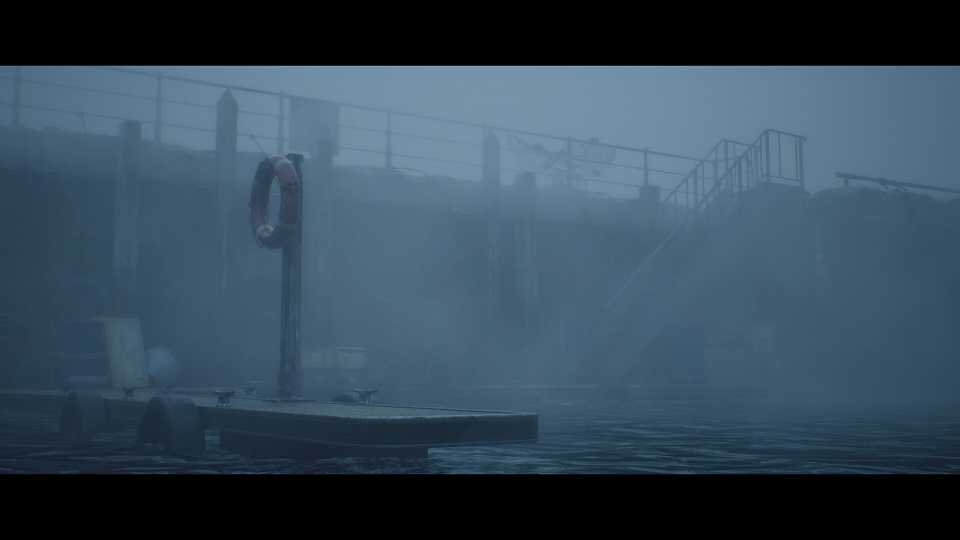
The decision to set Townfall in a fictional Scottish town called St. Amelia represents one of the game's most distinctive creative choices. McKellan emphasized that authenticity required drawing from genuine cultural experience and local knowledge. The team felt that attempting to represent a place they had not lived in would feel inauthentic and potentially disingenuous. Beyond cultural specificity, Scotland's physical landscape offers inherent horror potential. The narrow streets, cobblestone pathways, and distinctive architecture create a sense of entrapment even in open spaces, forming a natural labyrinth with unpredictable routes. This geography aligns perfectly with Silent Hill's core concept that familiar environments can become unsettling and wrong, with the Scottish setting's very structure working against the player's sense of safety and orientation.