Legal Scholars to Examine Gaming Regulation at G-STAR 2026
 James Whitfield
2 min read
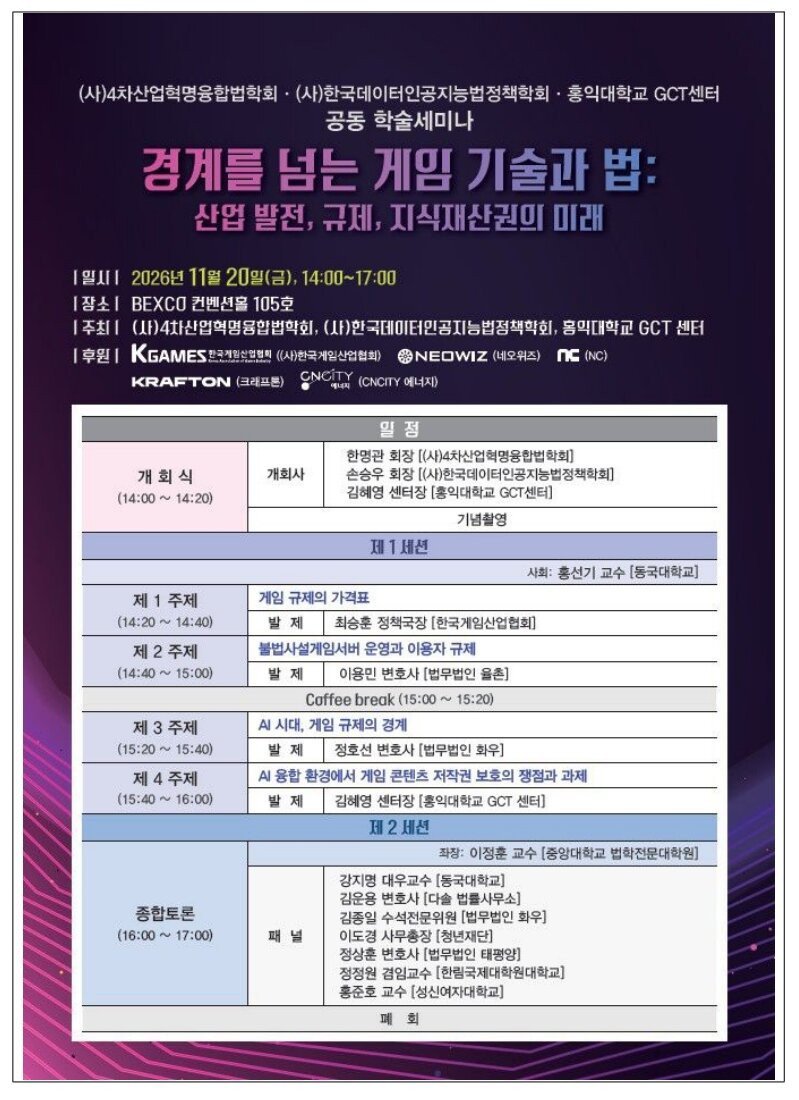
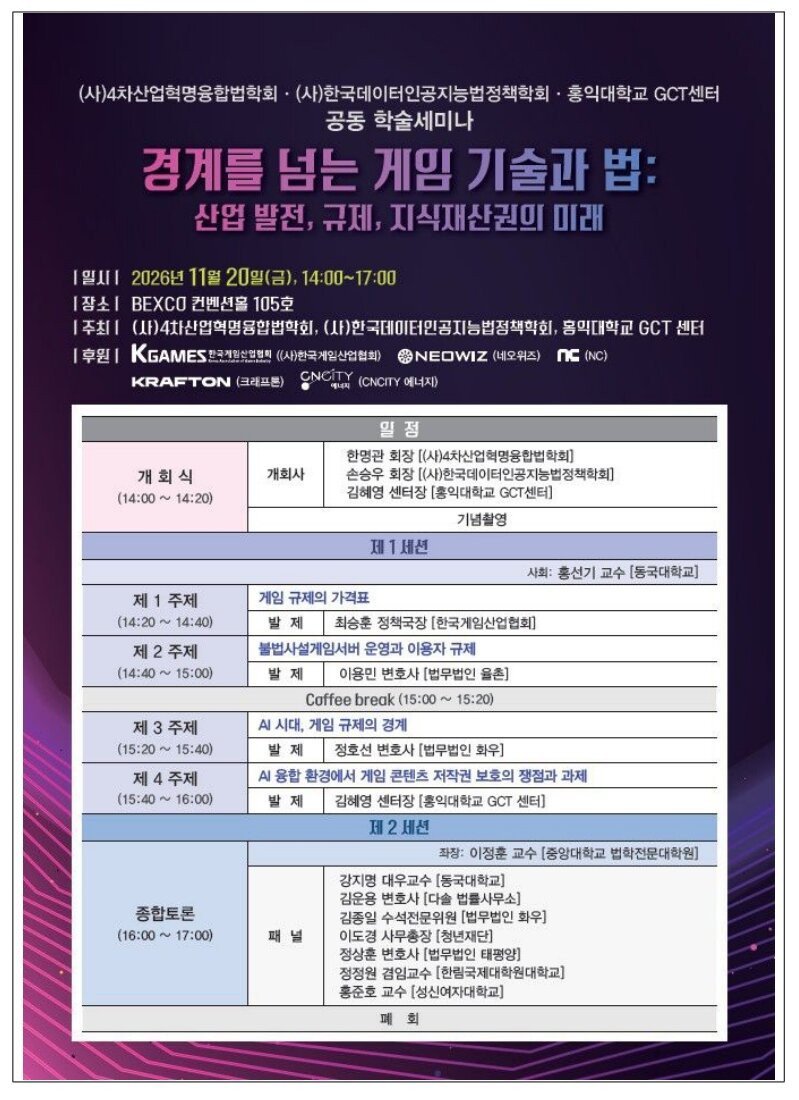
A coalition of legal organizations will convene an academic seminar focused on the intersection of gaming technology and law during G-STAR 2026, South Korea's largest gaming exhibition. The event is scheduled for November 20 at the BEXCO Convention Hall in Busan, running from 2:00 PM to 5:00 PM.
The 4th Industrial Revolution Convergence Law Association announced the seminar on November 13, partnering with the Korea Data Artificial Intelligence Law and Policy Society and Hongik University's GCT Center. The organizers selected the theme "Cross-Border Game Technology and Law: The Future of Industrial Development, Regulation, and Intellectual Property" to address emerging legal challenges as the gaming sector integrates with artificial intelligence, blockchain, the metaverse, and data-driven platforms. The seminar aims to examine how regulation and innovation can coexist while protecting users and intellectual property rights.
The event will open with remarks from three leaders: Han Myeong-kwan, president of the 4th Industrial Revolution Convergence Law Association; Son Seung-woo, president of the Korea Data Artificial Intelligence Law and Policy Society; and Kim Hye-young, director of the Hongik University GCT Center.
The first session features four presentations addressing different regulatory dimensions. A policy director from the Korea Association of Game Industry will discuss the economic costs of game regulation. Two attorneys will examine illegal private game server operations and user accountability, as well as how AI development is reshaping regulatory boundaries in gaming. A fourth speaker will address copyright protection challenges for game content in an AI-driven environment.
The second session consists of a panel discussion moderated by a law professor from Chung-Ang University, featuring seven panelists including academics, attorneys specializing in gaming law, and representatives from youth advocacy organizations. This format is designed to facilitate dialogue between different stakeholder perspectives on gaming regulation.
According to Han, the tension between the gaming industry and legal frameworks extends beyond sector-specific regulation. He characterized it as a fundamental societal question about how existing legal principles apply when new technologies emerge, and where the balance should lie between fostering innovation and safeguarding users. He noted that gaming regulation offers valuable lessons for developing legal frameworks suited to the broader Fourth Industrial Revolution.
The 4th Industrial Revolution Convergence Law Association, established in 2018, is an academic society comprising legal researchers, technologists, and industry practitioners. It regularly organizes conferences domestically and internationally to address emerging legal questions in technology-driven sectors.