
iPhone Duo’s crease visibility remains a long-term mystery
 James Whitfield
2 min read
James Whitfield
2 min read
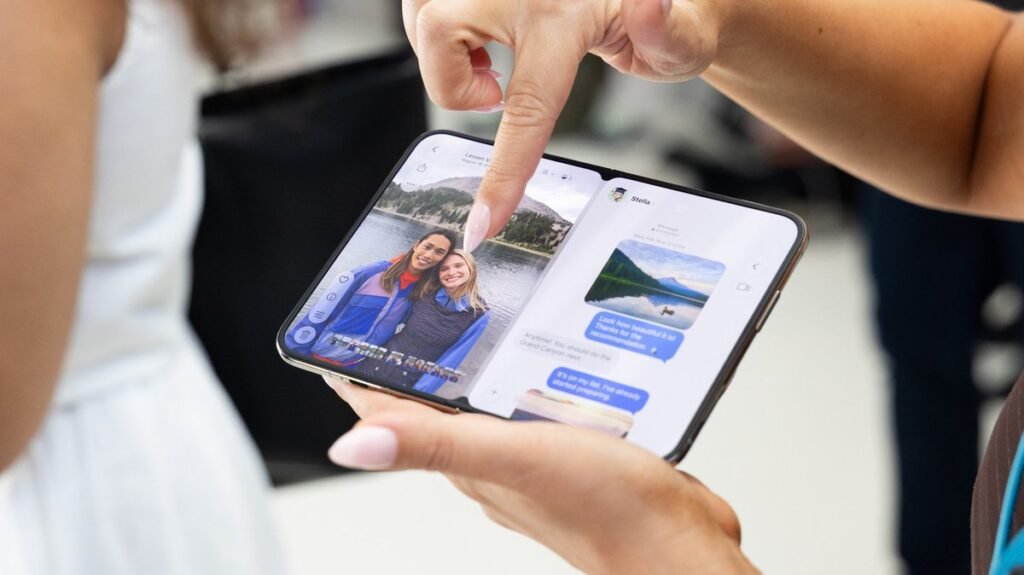
Apple's first foldable phone, the iPhone Duo, arrives next month with a key innovation designed to address one of the most persistent problems in foldable technology: the visible crease that forms along the fold line. While early hands-on impressions suggest the company has made meaningful progress, whether the solution will hold up over months of regular use remains an open question.
The crease has plagued foldable phones since their introduction, stemming from fundamental physics constraints. Current flexible display technology cannot fold without leaving visible or tactile marks along the seam. Manufacturers have gradually improved their approaches, making creases less pronounced, but none have eliminated them entirely. Apple's strategy differs from competitors by applying a matte nano-texture coating to the screen surface. This special finish dramatically reduces light reflection, which in turn makes the crease far less noticeable to the eye.
During initial product demonstrations, the crease on the iPhone Duo proved difficult to spot visually, though it remained detectable by touch. Some observers who examined the device reported barely noticing it at all, while others noted the crease remained visible and expressed concern about its progression over time. Early assessments described the crease as "easier to feel with your finger than observe with your eyes," suggesting Apple's nano-texture approach delivers real benefits in its initial state.
However, the critical unknown involves how the screen will age. Samsung's experience with the Galaxy Z Fold 8 illustrates the challenge. These devices ship unfolded and appear nearly flat fresh from the box, but repeated folding and unfolding causes the crease to become increasingly pronounced. Multiply this by thousands of fold cycles over months or years, and the cumulative wear becomes substantial. Online communities regularly share images of foldable phones with severely damaged screens, raising legitimate questions about long-term durability.
Apple executives have publicly expressed confidence in the iPhone Duo's durability and claimed it will outperform competitors' offerings. Yet confidence and reality often diverge once products reach millions of users. The company cannot know how its nano-texture coating will perform under real-world conditions—daily folding, temperature fluctuations, dust exposure, and the general wear of extended use—until the device spends months in consumers' hands.
The hands-on impressions available now represent only a snapshot of a brand-new device. Initial reviews, including those from major tech outlets, can only speak to the iPhone Duo's appearance fresh from the box. The picture may look quite different after three months of regular use, let alone a year. Durability testing by content creators on platforms like YouTube will eventually provide more comprehensive data, but that will take time to accumulate and analyze.
Apple deserves recognition for engineering a screen that already minimizes the crease's visibility from day one. That represents genuine progress in foldable technology. Whether the nano-texture solution proves durable enough to maintain that advantage over time will determine whether it becomes an industry standard or merely a temporary advantage. The answer will only emerge through extended real-world use.