
Overcooked’s Makers Design Stage Fright to Heal, Not Harm
 James Whitfield
3 min read
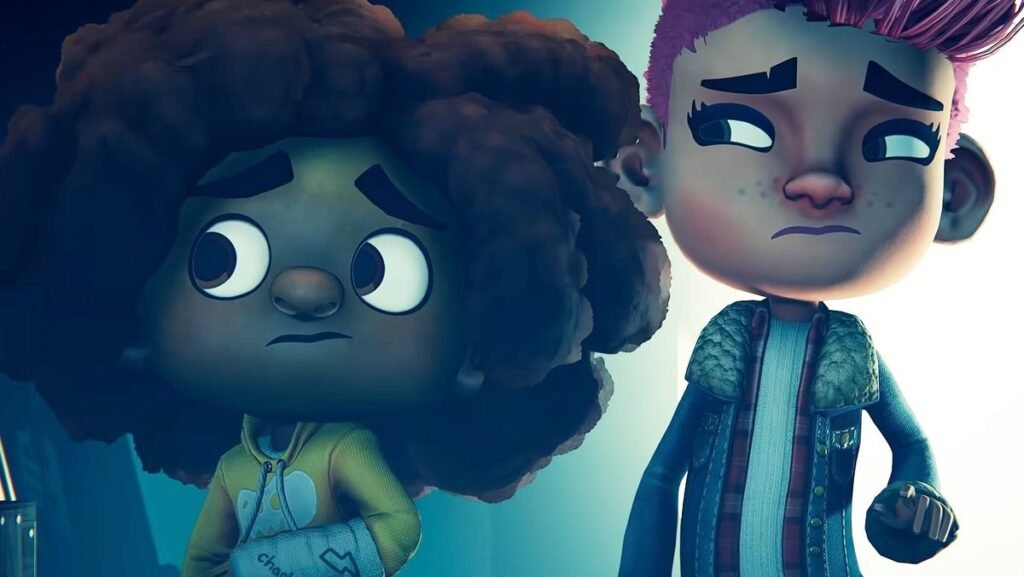

Ghost Town Games is taking a deliberate turn with its next co-op title, Stage Fright, steering away from the competitive tension that made Overcooked infamous for fracturing friendships. The studio behind the chaotic kitchen simulator—a game so divisive it earned the nickname "The Divorce Kitchen" in China—is now designing an experience meant to build relationships rather than strain them.
Published by Hello Games, Stage Fright represents a philosophical shift for the developer. Co-director Oliver De-Vine framed the change as a natural evolution: "Overcooked broke you apart and Stage Fright is there to put you back together." Rather than viewing this as a criticism of their previous work, De-Vine emphasized that the studio wants to be a constructive force in gaming communities. "We're trying to foster community in our games," he explained. "They're about communication between people, and less about being very good with the fidelity of a controller."
The design philosophy centers on rewarding communication over reflexes. Games designer Phil Duncan pointed to observations from convention demonstrations where the difference was stark: groups playing in silence struggled and failed, while pairs who talked constantly succeeded effortlessly. "It's exciting to us, the idea that the people who are good at our games are the ones who are good at communicating," Duncan said. One memorable example involved an eight-year-old girl and her friend who chatted throughout their playthrough and breezed through levels that had stumped older, silent players.
Stage Fright tasks two players with guiding a pair of children through a supernatural adventure inspired by games like Luigi's Mansion. The experience combines puzzle-solving, obstacle avoidance, and mystery investigation, all dependent on player cooperation. Despite the increased complexity compared to Overcooked's frenetic cooking, the developers maintained accessibility by keeping actions simple and physical. De-Vine stressed that "everything is communicated between the players verbally," with no inventory systems or note-taking required. Players carry obvious, chunky items and must discuss their findings aloud.
The game supports both local and online play, with a key design decision ensuring online sessions feel as close to couch co-op as possible. Both modes feature split-screen displays so players can see what their partner is observing and coordinate their actions. "The ideal situation is that you're sat next to someone and you're nudging them and you point at the same thing," Duncan said. "So it's as close as we can get to that online."
Regarding structure, Stage Fright employs a non-linear progression system similar to escape room design. Players discover clues that may not immediately connect to their current puzzle, requiring them to remember details for later use. De-Vine described the approach using an unusual comparison: "It's linear in the way that Silent Hill is linear." He clarified the odd reference by adding, "Imagine family-friendly Silent Hill," acknowledging the strangeness of comparing a puzzle adventure to a horror game while highlighting how players navigate a world with interconnected mysteries rather than a strict sequence of challenges.
This design direction reflects a broader ambition for Ghost Town Games to create games that strengthen rather than test relationships. By prioritizing communication and removing high-pressure time constraints, Stage Fright positions itself as a title designed for players who want to cooperate rather than compete, marking a significant departure from the studio's reputation for creating friendly chaos.




1 thought on “Overcooked’s Makers Design Stage Fright to Heal, Not Harm”