South Korea’s Gaming Industry Faces Budget Neglect Despite
 James Whitfield
2 min read
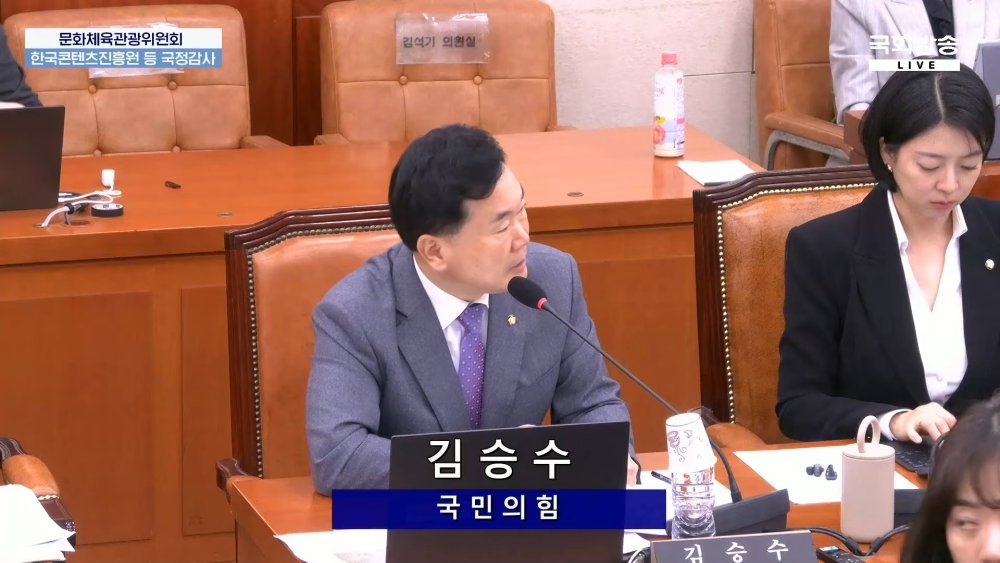
A member of South Korea's National Assembly has accused the government of treating the gaming industry as an "abandoned child," pointing to a stark disparity between its economic contribution and the support it receives.
During an October 12 parliamentary audit of the Korea Creative Content Agency, Rep. Kim Seung-soo of the People Power Party highlighted the imbalance in funding allocation. Gaming generated $8.5 billion of the country's $14.1 billion in total content exports in 2024—accounting for 60.4% of the sector's international revenue. Yet the gaming industry received only 112.3 billion won of the 1.6 trillion won content industry budget for 2026, representing just 6.9% of total funding. The lawmaker also noted that no gaming support budget was included in the year's supplementary appropriations.
Rep. Kim detailed additional budget cuts affecting the sector. Funding for purchasing artificial intelligence tools to support gaming startups was eliminated entirely from next year's budget, and talent cultivation programs also lost all financial support. These reductions underscore what he characterized as systematic neglect of an industry critical to the nation's cultural exports.
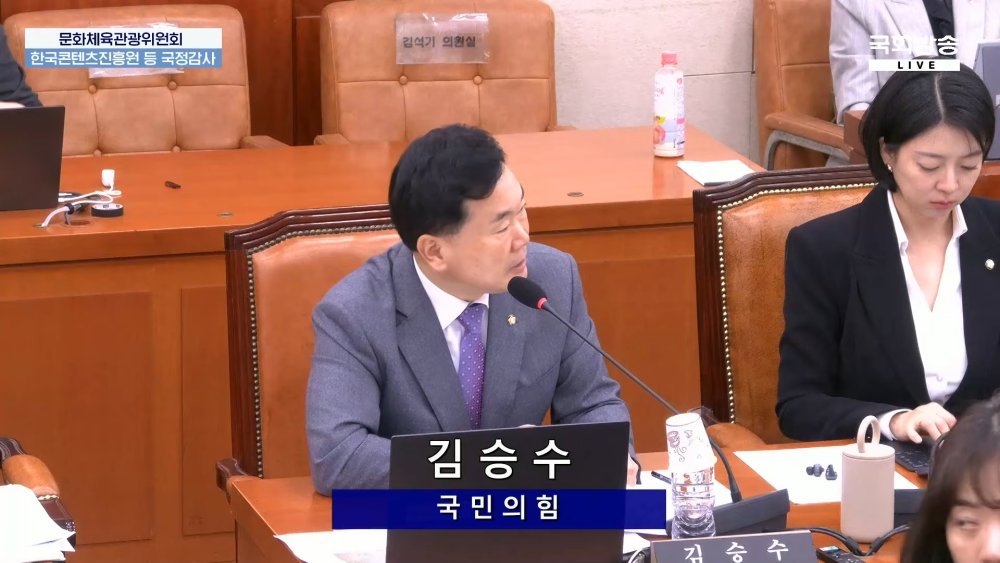
The lawmaker further criticized the government's policy-making process, citing data showing that the presidential Popular Culture Exchange Committee held 23 sub-committee meetings over one year, with only two focused on gaming. He revealed that officials initially failed to report any gaming-related meetings before revising their submission after his intervention. The Cultural Arts Policy Advisory Committee, established in November, has not held a single gaming sub-committee meeting.
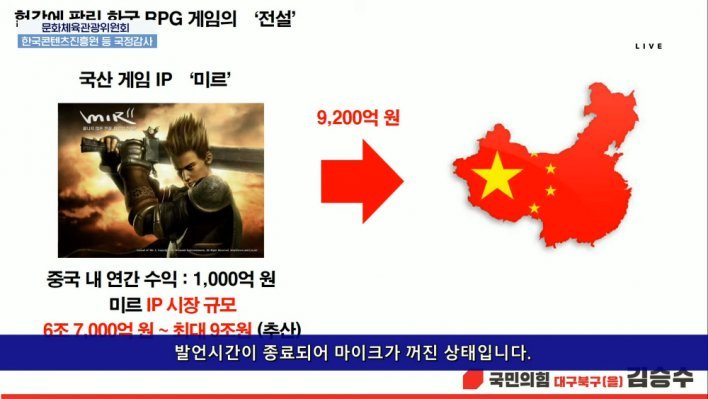
Rep. Kim also raised concerns about the sale of Wemade, a major gaming company, to foreign investors. In June, founder Park Kwan-ho agreed to transfer a 39.33% stake to NeoPulse, an investment platform owned by Hong Kong-based Shengsong Investment, for 920 billion won. The transaction is scheduled to close on October 30, making NeoPulse the largest shareholder. The lawmaker expressed alarm that the company's flagship intellectual property, Mir, would effectively pass to Chinese control. Mir generates approximately 100 billion won annually in licensing revenue, and industry analysts have valued the IP at between 6 trillion and 9 trillion won—far exceeding the sale price.
Rep. Kim highlighted the contradiction between government rhetoric and action, noting that KOCCA President Kim Yoon-ji had previously stated that securing and expanding valuable domestic content IP was essential to South Korea's success in the global market. Yet the agency appeared passive as a leading national gaming asset was sold at what he characterized as a bargain price to foreign capital. He called for measures to restore South Korea's standing as a gaming power and to protect Wemade employees' job security.
In response, KOCCA leadership stated they would continue monitoring developments and pledged to prioritize IP discovery and new business expansion in gaming. However, they did not commit to specific budget increases or policy changes to address the concerns raised during the audit.