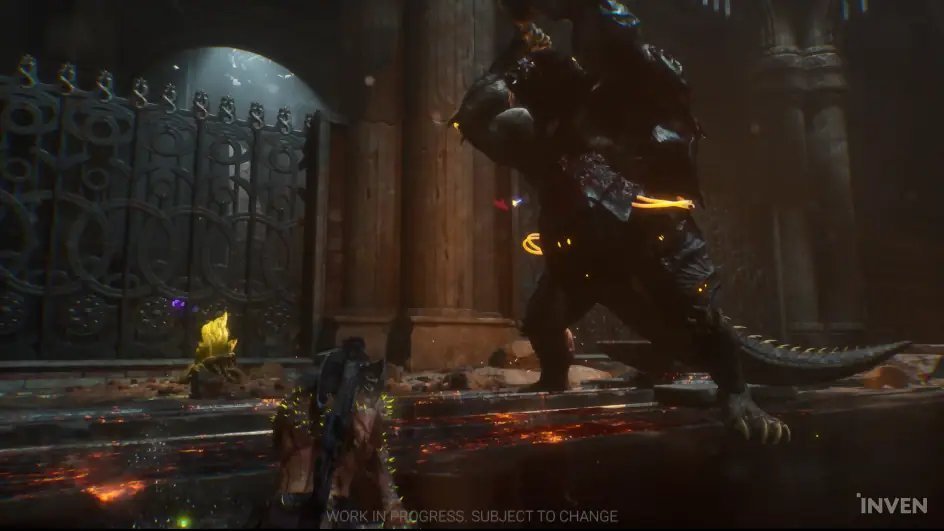
Turok: Origins Brings Dinosaur Action Back in 2027
 James Whitfield
3 min read

The Turok franchise, which launched players into dinosaur-filled worlds starting in 1997, is making a comeback after years away from the spotlight. Saber Interactive is developing and publishing Turok: Origins, a reimagined action experience that blends the series' core identity with contemporary gameplay mechanics. The title is scheduled to arrive in spring 2027 across PC, PlayStation 5, Xbox Series X|S, and Nintendo Switch 2.
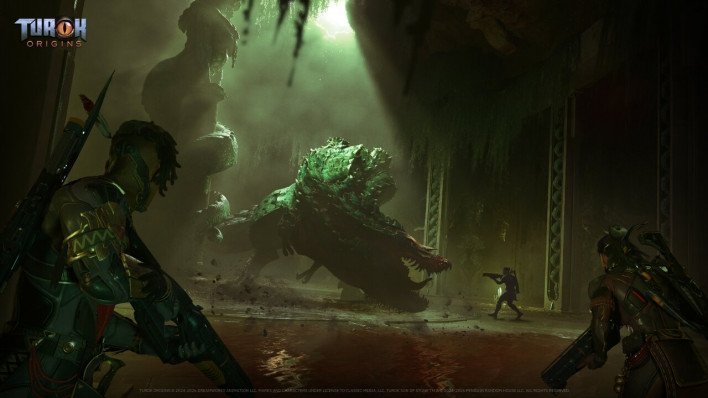
Turok: Origins takes place before the events of the original game and explores the origins of the Order of the Turok, an ancient group of warriors tasked with protecting the world from threats. Players assume the role of Turok warriors equipped with bio-suits called Mantles and face off against the Xenia, a reptilian alien force. The game supports solo play or cooperative sessions with up to three additional players. A defining feature is the EchoSyncs system, which lets players harvest power from defeated enemies and environmental sources to upgrade their Mantles with new abilities and skills as the game progresses.
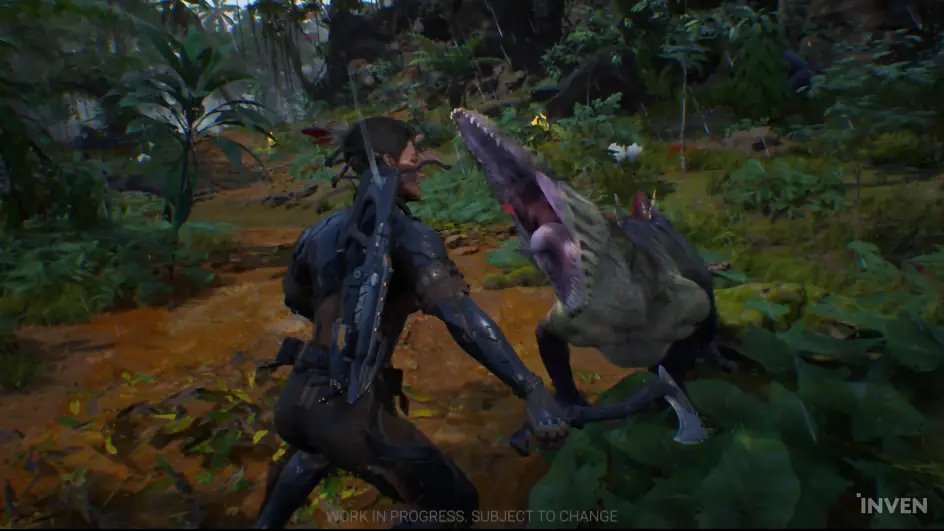
At Tokyo Game Show 2026, attendees had the opportunity to experience an early section of the game during a hands-on demo. The playable portion depicted a trial sequence where a character seeks acceptance into the Turok order. Character creation offered roughly ten preset appearances, with both male and female options featuring distinct facial features, outfit designs, and face paint variations. Players then selected from three available classes—Bison, Cougar, and Raven—each equipped with unique abilities and weapon loadouts. The Raven class, which uses a bow as its primary weapon, was the focus of the demo experience.
One of the most striking aspects of Turok: Origins is its perspective system. Players can switch between first-person and third-person views at any moment by holding the D-pad, and the transition occurs without interruption. Beyond simply repositioning the camera, the game renders animations differently depending on the active perspective. A dodge maneuver in third-person triggers a rolling animation, while the same action in first-person displays as a quick forward dash. This attention to detail ensures both viewpoints feel like equally viable ways to engage with the game.
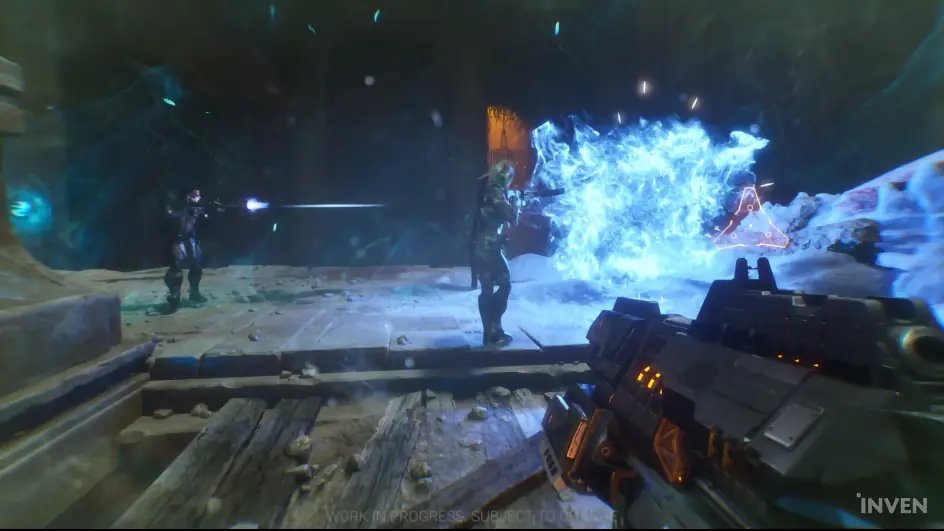
Combat centers on a three-weapon loadout system. The demo featured a powerful bow, a rocket launcher, and a laser rifle that fires continuously. Rather than traditional magazine-based reloading, weapons overheat with prolonged use. Pressing the reload button initiates a cooling sequence that functions mechanically like reloading in conventional shooters. The game rewards aggressive play through melee finishers: when an enemy's health reaches a critical threshold, an orange outline appears around it. Executing a melee attack at this moment triggers a finishing animation—such as tearing open a dinosaur's jaw or slashing an alien's throat—that provides tangible benefits like health restoration or charging the ultimate ability meter. These executions are visually intense and encourage players to alternate between ranged attacks and close-quarters finishing moves, creating a satisfying combat rhythm.
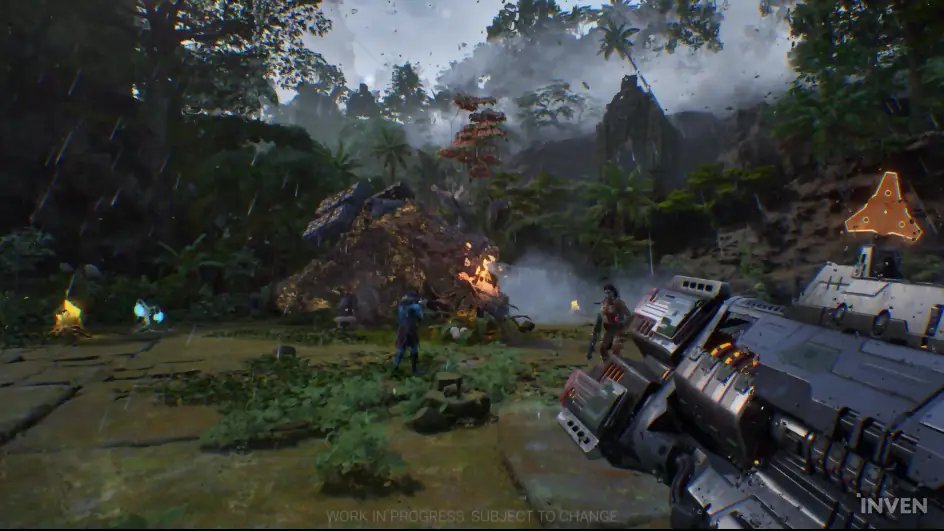
The Raven class demonstrated the depth of the ability system. Its EchoSync abilities included deploying a gravity field to immobilize enemies temporarily and generating a protective barrier for allies. Chaining abilities with weapons—for example, trapping foes in a gravity field before launching a rocket—proved essential for managing groups of attackers. The bow itself, despite being an energy weapon, delivered impactful feedback through sound design, blood effects, and enemy reactions that made each shot feel consequential. Saber Interactive's experience developing action-focused titles like Warhammer 40,000: Space Marine 2 is evident in the polish and pacing of the combat encounters.
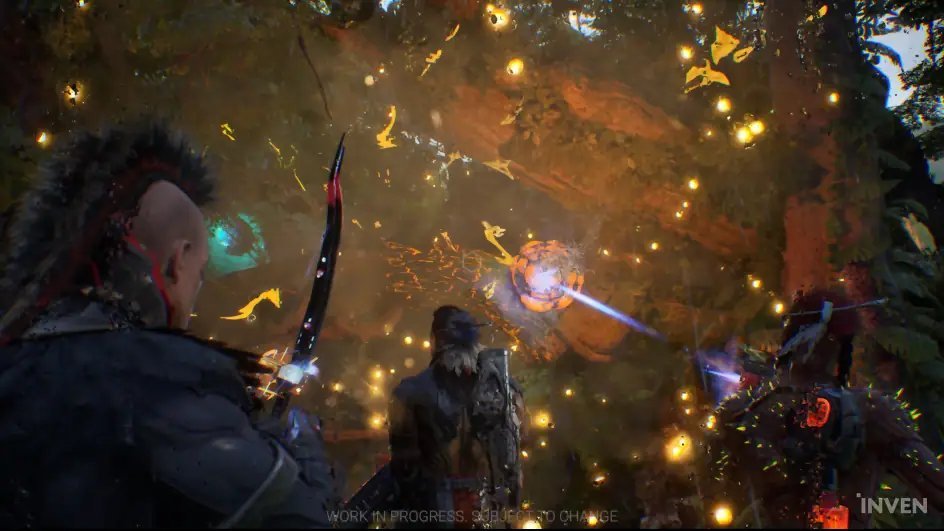
The demo's linear structure prioritized continuous, fast-paced combat over complex exploration, making it difficult to assess the full scope of level design from the brief preview. However, the combat mechanics demonstrated considerable refinement, with melee finishers playing a crucial role in maintaining momentum during intense battles against multiple enemies.
One notable limitation emerged during the demo: the Steam store page currently lists Korean language support as unavailable for both interface and subtitles. When asked about Korean localization during an interview at the event, Director Jesús Iglesias indicated he would advocate for its inclusion upon returning to the studio in Madrid. With the spring 2027 release still months away, there remains time for language support to be added before launch.