
The Gentlemen Season 2 Loses Its Way Chasing Godfather
 James Whitfield
3 min read
James Whitfield
3 min read
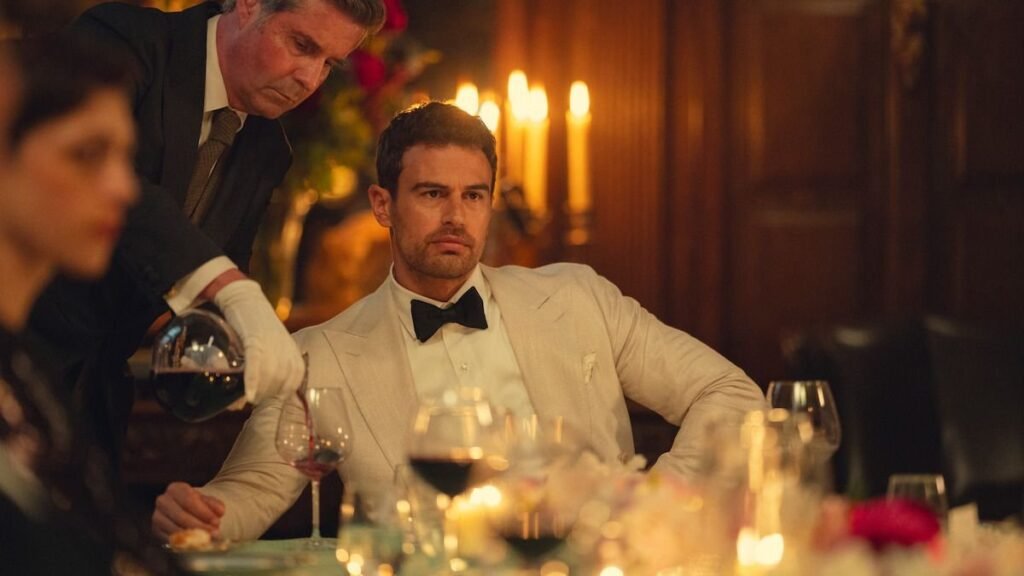
Guy Ritchie's second season of The Gentlemen trades the irreverent humor and colorful characters that defined the first season for a self-serious attempt to recreate The Godfather, ultimately losing sight of what made the Netflix series entertaining in the first place.
The season follows Duke Eddie Horniman, played by Theo James, as he transitions from desperately trying to free his family from criminal obligations to eagerly embracing a life of crime himself. Characters including billionaire Stanley Johnston and aging gang leader Bobby Glass repeatedly insist that Eddie must endure hardship to reach his potential, but the narrative that unfolds feels more like an obligation than a compelling story. Rather than exploring the criminal underworld of the United Kingdom where Ritchie excels, the expanded scope moves into Italy, where the director indulges in Godfather references and picturesque lakeside settings without adding meaningful depth to the plot. The core conflict remains largely unchanged from season one, with most narrative detours feeling pointless rather than purposeful.
Eddie's journey is visually defined by Theo James' perpetual brooding scowl as he juggles his dual roles as a criminal operator and a hereditary member of the House of Lords. The pressure mounts as he attempts to seize control from the aging Bobby, whose questionable decision-making—including taking counsel from a mythical sauna sprite, one of the season's better comedic moments—has frustrated his ambitious successor. Yet despite the supposed weight of Eddie's suffering, the consequences feel insubstantial. He recovers from a severe beating without lasting injury, and an attempt to recreate one of cinema's most emotionally devastating moments falls flat because Eddie never demonstrates genuine attachment to what he loses. Sworn enemies inexplicably decide to support him, while rivals like Johnston are reduced to delivering eloquent speeches about noble lineage rather than posing actual threats.
The season's most glaring misstep is sidelining the characters who made the first season fun. Susie Glass, played by Kaya Scodelario, had served as an effective counterbalance to Eddie but is relegated to choosing between men in season two, though she does find some agency through her interactions with Joe, an old flame turned cocaine dealer. The chemistry between Scodelario and James remains compelling, which makes Ritchie's decision to pull them apart feel manipulative rather than dramatically earned. Meanwhile, Jimmy Chang, the chief grower who provided much of the show's stoner humor, appears in only one episode despite dealing with labor unrest and experimental product issues. Eddie's chaotic older brother Freddy, whose unpredictable presence was sorely missed, spends the entire season in a rehab facility.
New additions to the cast fail to compensate for these absences. Nanny, Eddie's status-obsessed brother-in-law, functions primarily as a wet blanket, dismissing the groundskeeper Geoff Seacombe despite the man being married to his wife Charlotte. The reveal that Charlotte is actually Geoff's daughter adds complexity that Nanny's obliviousness undermines. The season does offer occasional bright spots: money launderer Chucky Kubra's scheme to open Japanese-Pakistani restaurants provides genuine laughs, and an entire episode devoted to Eddie tracking down a missing prized falcon to gain favor in the House of Lords demonstrates the show's potential when focusing on its core setting. Hugh Bonneville's turn as the seduction-prone Lord Hawthorne also proves entertaining, suggesting that the show thrives when exploring British criminal and aristocratic circles rather than attempting international expansion.
From a technical standpoint, The Gentlemen remains visually impressive. Ritchie employs luxurious sets, detailed costumes, and the kinetic energy that defines his best work through chase sequences and chaotic shootouts. However, excessive close-up shots of actors speaking directly to the camera fail to utilize the sumptuous scenery that surrounds them, creating a disconnect between the show's visual ambitions and its execution.
The season concludes by setting the stage for a third installment, with Eddie having learned difficult lessons about ambition's perils. The question now becomes whether Ritchie will absorb those same lessons. The director's attempt to elevate The Gentlemen through gravitas and Godfather homages has diluted what made it distinctive. Rather than pursuing prestige through imitation, the series would benefit from returning to what it does best: exploring the absurdities and humor inherent in British criminal enterprises and aristocratic privilege. The Gentlemen is now available to stream on Netflix.