Blood of Dawnwalker’s power fantasy misses the mark for true
 James Whitfield
3 min read
James Whitfield
3 min read
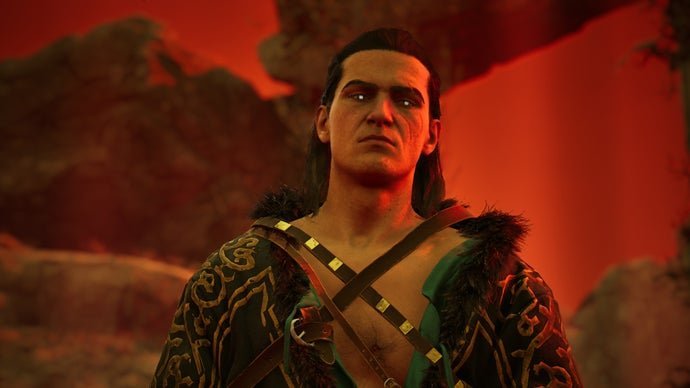
Blood of Dawnwalker positions itself as a vampire RPG, but its opening hours reveal a fundamental disconnect between the narrative and the mechanics. The protagonist Coen becomes a vampire and spends several scenes lamenting his transformation, yet the actual gameplay tells a very different story. He gains the ability to teleport, scale walls, slow time, and convert enemies into thralls. He avoids most traditional vampire weaknesses, including sunlight vulnerability, allowing him to move freely through the world during daylight hours. The result is a power fantasy that undermines any sense of genuine struggle or consequence.
This gap between story and systems is hardly unique to Blood of Dawnwalker. Vampire fiction across all media tends to struggle with the same problem: it's difficult to convince audiences that immortality, superhuman abilities, and eternal youth are genuinely terrible fates. Most vampire stories attempt to warn players or readers about the curse of eternal life, only to immediately demonstrate that the downsides pale in comparison to the advantages. Coen's complaints about inner corruption ring hollow when the player can access a skill menu and see all the powerful abilities awaiting them.
What would genuinely capture the horror of vampirism, however, is a different kind of game entirely: a true vampire survival simulator where the legendary weaknesses of folklore actually matter. Imagine playing as a feral, desperate creature living on society's margins, constantly hunted by sunlight and vulnerable to the countless supernatural deterrents that exist across global folklore. Juniper berries, garlic, crucifixes, running water, holy water, church bells, and uninvited thresholds would transform every environment into a minefield. Combat would be impossible against organized groups, forcing players to rely on strategy, misdirection, and careful social manipulation rather than supernatural power.
In such a game, survival would depend on systemic thinking rather than combat prowess. A player might need to cultivate relationships with specific communities, manipulate local politics, or carefully manage their feeding habits to avoid detection. The challenge would come from navigating a hostile world with severe limitations, not from unlocking increasingly powerful abilities. This approach would create genuine tension between the vampire's needs and the world's defenses against them.
Vampire: The Masquerade – Bloodlines from 2004 comes closest to this vision, requiring players to maintain the masquerade between vampire and human society while managing clan politics. Choosing a Nosferatu character makes the game deliberately harder by making it impossible to move freely among humans. However, even Bloodlines doesn't quite achieve the isolated, desperate experience being sought. Players still have access to an entire vampire society and community, which undermines the sense of being a hunted outcast.
Other vampire games fall short in different ways. Vampyr casts the player as a doctor in plague-ridden London, but it's fundamentally a third-person action game with a linear plot, not a systems-driven survival experience. The Necromancer's Tale offers a similar structure where players must hide their nature while living in a community, but again, the core chapter-based storyline constrains the experience rather than letting systems drive the narrative.
The closest existing inspiration comes from an unexpected source: Fairysite, a turn-based colony builder where players control fairies living alongside human villages. The key mechanic captures what a vampire survival sim needs: parasitic dependency. The fairies need humans for defense and as a food source, but humans also threaten the fairies' existence through expansion. Players must carefully manage this relationship by hexing fields to slow production while keeping the humans alive and useful. The power comes not from direct confrontation but from subtle manipulation and systemic understanding.
Ghost Master, another older game, operates on similar principles. Players place ghosts around a household and manipulate residents' phobias to harvest fear, but they cannot directly confront the humans. The challenge lies in sabotage and psychological pressure rather than combat. A vampire game built on these principles—one that might be called Vampire Pathologic or Draculogic—would create genuine tension between predator and prey. The vampire would need to think strategically about every interaction, every movement, every feeding. That's the game worth making, and it's the experience Blood of Dawnwalker's power fantasy ultimately prevents.