Dragon Ball’s 8 Strongest Super Saiyan Forms, Ranked by
 James Whitfield
4 min read
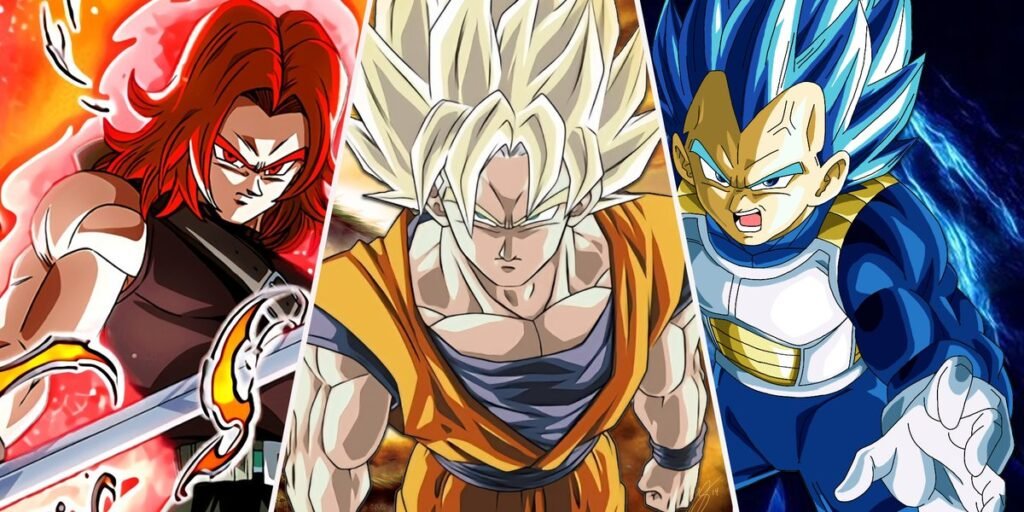
The Super Saiyan transformation stands as one of anime's most recognizable power-ups, and since Goku first achieved it on Namek, the Saiyan race has continuously shattered its limits with new forms in increasingly vibrant colors. Each hue represents a distinct tier of strength, from the original golden form to the godly white transformations of the modern era. The franchise has explored these color variations across the main canon, movies, alternate timelines, and video games, creating a diverse roster of power-ups that don't all carry equal weight.
The original Super Saiyan form featured golden hair, a choice made partly for practical reasons—creator Akira Toriyama selected the color so he and his assistants wouldn't need to spend excessive time inking Goku's hair in every chapter. Yellow remains the most iconic and recognizable Super Saiyan color, inspiring similar transformations across other franchises like Sonic the Hedgehog's Super Sonic form. However, despite its cultural impact and popularity, yellow-haired Super Saiyan forms—including Super Saiyan 2, 3, and various grade variants—rank as the weakest tier of Super Saiyan transformations available to the Saiyan race.
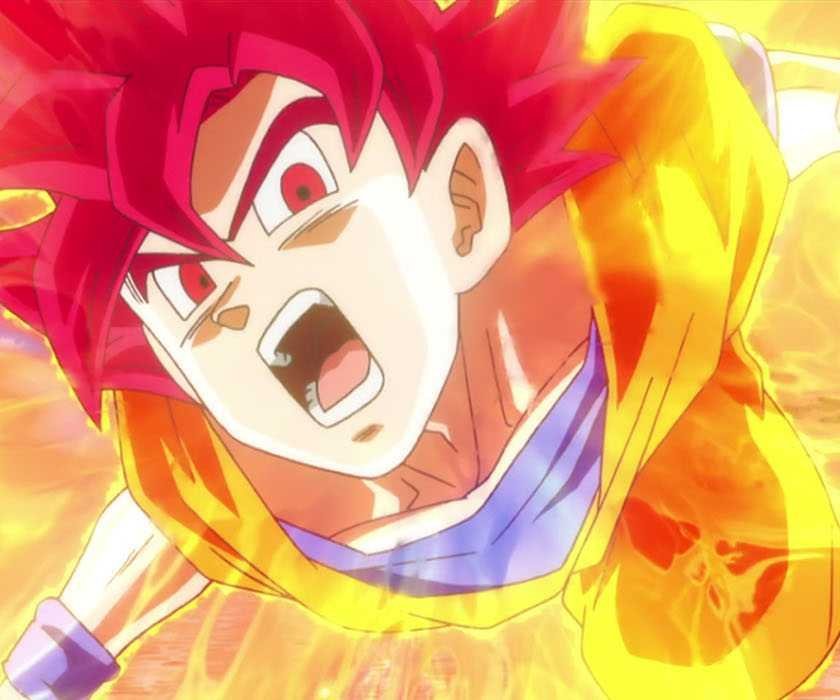

Red represents the next step up in power, carrying visual weight that conveys greater strength than yellow's brightness. The color appears across multiple timelines and forms, beginning with Goku's Kaioken transformation in Dragon Ball Z and later returning as Super Saiyan God's signature color in Dragon Ball Super. Super Saiyan 4 Goku's red fur and hair in Dragon Ball DAIMA symbolizes a return to primal roots, while Super Saiyan 4 Gogeta's dark red hair immediately signals a being far beyond typical Saiyan limits. Red frequently signals proximity to godhood in the Dragon Ball universe, though it remains far from the peak of Saiyan capability.
Pink emerges as an unexpectedly regal color through Super Saiyan Rosé, the exclusive form of Goku Black. This villain, a version of Zamasu who stole Goku's body, possesses access to mortal Ki, God Ki, Saiyan Ki, and Kai Ki simultaneously. When activating Super Saiyan Blue with all these power sources, the form mutates into the pink-haired Super Saiyan Rosé, which carries slightly more base power than standard Blue due to Goku Black's godly nature. The form demonstrates incredible potential, as shown in Super Dragon Ball Heroes where Rosé can even achieve its own Super Saiyan 2 and 3 variants.
Blue holds tremendous significance as Super Saiyan God Super Saiyan, introduced in Dragon Ball Z: Resurrection F as the intended permanent replacement for the original yellow form. Though this plan didn't materialize, Super Saiyan Blue became the longest-used transformation in the entire series, appearing consistently across more arcs and years than any other form. The transformation combines Super Saiyan Ki with God Ki, granting users a godly power boost that far surpasses Super Saiyan God. While Goku reaches his peak with Mastered Super Saiyan Blue, Vegeta evolved the form further into Super Saiyan Blue Evolved, a variant possessing the power level of a Destroyer.
Black hair, though often overlooked as a Super Saiyan color since it represents the characters' default states, defines several of the franchise's most powerful transformations. Ultimate Gohan holds the distinction of being Dragon Ball Z's strongest Super Saiyan form while sporting black hair, and Goku's most powerful form in Dragon Ball GT, Super Saiyan 4, similarly features black hair. The color resurfaces prominently in Dragon Ball Super through Wrathful Broly, whose green aura and black hair provide enough power to rival Super Saiyan Blue Goku. Ultra Instinct Sign and True Ultra Instinct also maintain black hair as their primary color scheme, representing Goku's return to martial arts fundamentals.
Purple conveys violent, destructive power throughout Dragon Ball's narrative. Broly's A-Type Super Saiyan form features purple hair, a restricted state that still rivals the Z-Fighters despite Paragus's ring limiting his full potential as a Legendary Super Saiyan. In Dragon Ball Super: Beerus, Goku's Super Saiyan Blue Kaioken x20 received a redesign featuring purple hair instead of cyan. Most significantly, Vegeta's Ultra Ego form in the Dragon Ball Super manga displays purple coloring, directly signaling that Vegeta now wields the power of a Destroyer—a visual connection to the Gods of Destruction's purple aesthetic established since Battle of Gods.
Green represents raw, primal power through the Legendary Super Saiyan form. Dragon Ball Z: Broly – The Legendary Super Saiyan used green to convey this form's overwhelming strength, with Broly's final battle showcasing his green-haired dominance. Notably, Super Saiyan Goku briefly turns green before defeating Broly, demonstrating that he too possesses the potential of a Legendary Super Saiyan. The color returned in Dragon Ball Super with Toriyama's redesigned Broly, who uses a lime-green coloring that complements his softer features. According to artwork, Broly only accesses his full power when his hair turns green, and True Legendary Super Saiyan Broly achieved enough strength to potentially defeat Gogeta Blue, making green one of the franchise's strongest Super Saiyan colors.
White stands as the single most powerful Super Saiyan color as of Dragon Ball Super Chapter 103. This color appears through Perfected Ultra Instinct and Gohan Beast, forms that blur the line between traditional Saiyan transformations and entirely new power tiers. White carries angelic connotations in Dragon Ball, particularly through Ultra Instinct's design, which draws inspiration from the Angels and the Grand Priest. While Gohan Beast lacks angelic qualities, it employs white coloring as shorthand to signal that Gohan matches or potentially exceeds Perfected Ultra Instinct Goku's power level. The franchise would struggle to introduce a color surpassing white's symbolic and narrative weight at this point in the series.