
Path of Exile 2 version 1.0 launches December 11 with two
 James Whitfield
3 min read
Path of Exile 2 reaches its full 1.0 release on December 11, bringing a massive expansion that includes two new playable classes, two additional campaign acts, a new seasonal league, dozens of new bosses and monsters, significant skill tree revisions, and hundreds of new items and unique equipment.
The two new classes arriving with the launch are the Shadow and the Duelist, each opening up distinct playstyles. The Shadow gains access to daggers and introduces mechanics centered on stealth, traps, and shadow clones that fight alongside the player, alongside returning favorites like blade vortex and fire trap. The Duelist wields swords and brings popular abilities such as cyclone and hemorrhage into the game. Sword combat adds considerable depth through stance mechanics like blood and sand or ready stance, with players able to equip weapons in two-handed, dual-wield, or sword-and-shield configurations.
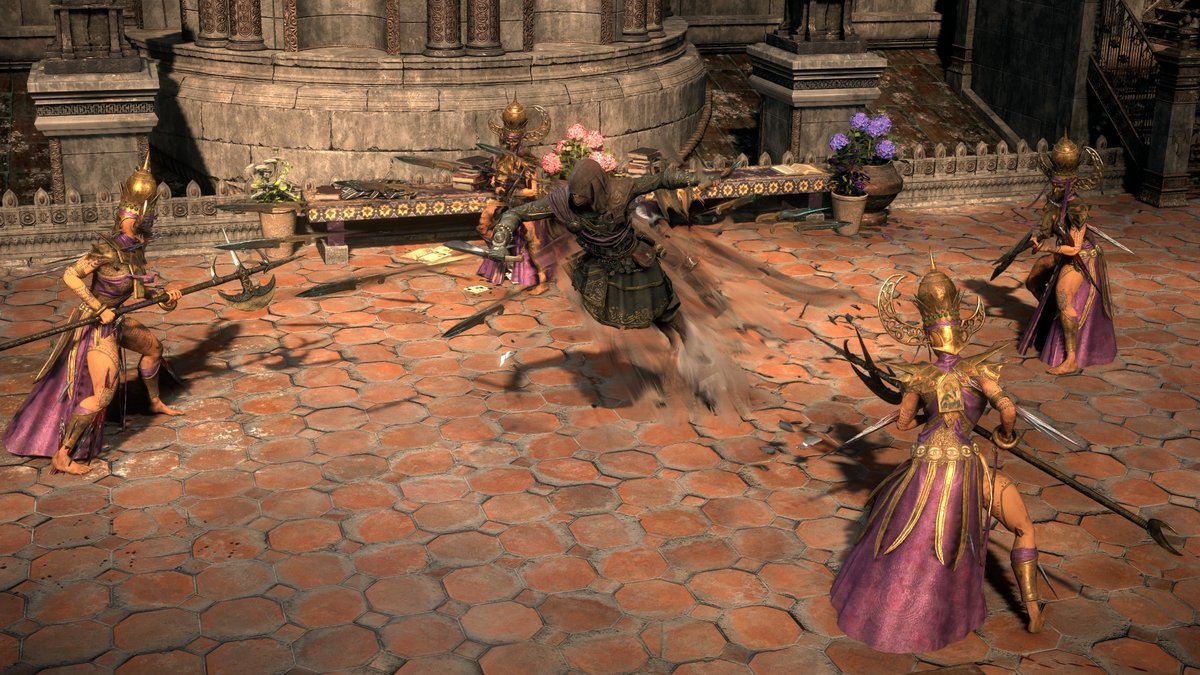
After two years in early access, the campaign story concludes with Acts Five and Six, completing the narrative arc of pursuing the Beast across the world and returning to the city of Oriath and beyond. The new campaign areas feature custom rare monsters with unique appearances, abilities, and modifiers. These sections also introduce players to the 1.0 league mechanic: Conquerors of Wraeclast, a base-building system where players recruit armies and construct a castle. Throughout the campaign, over 70 recruitment points allow players to enlist different soldier types and engage in battles to defeat enemy commanders and claim rewards. As the base develops, players can recruit commanders to lead armies in autonomous battles, similar to the Kingsmarch system from the original Path of Exile, converting gold into atlas progression and loot generation.
The endgame expands the base-building mechanic into player-versus-player territory. After completing the campaign and defeating pinnacle bosses, players join one of three factions—Karui, Ezomyte, or Marraketh—and use their armies to contest control of castles scattered across the atlas. Controlling a castle grants fast travel access to that location, provides increased item rarity, and unlocks nearby hunting grounds populated with rare monsters that drop enhanced loot. Currency earned through battles can be spent on a crafting system that lets players remove mods from items and reroll them into new fractured mods. The campaign bosses reappear in the endgame across more than 25 new maps.
The atlas skill tree receives substantial restructuring, shrinking from over 300 nodes down to approximately 70. Players pursuing a direct path through the tree should acquire roughly 50 of the 70 available nodes by the time they face the Arbiter of Divinity, the new pinnacle boss. Jewel placement on the passive tree has been redesigned, moving jewels from travel nodes on the tree's perimeter into actual skill clusters, which should create greater diversity in endgame character builds and reduce the prevalence of identical tree configurations.
Gem systems undergo extensive updates. New skill gems arrive for daggers and swords, while existing weapons receive additional skills. Support gems have been rebalanced for improved utility—elemental penetration variants consolidate into a single gem, brutality now applies reduced penalties to chaos damage, and chain support functions as a pure upgrade without the previous damage penalty on initial hits. The overhaul extends to over 70 unique items receiving adjustments and approximately 40 new uniques entering the game, with new base types also introduced. Some base types appear particularly powerful, such as armor granting immunity to curses, making unique item discoveries more rewarding throughout the campaign.
The 1.0 release represents a significant milestone for both longtime early access players and the broader Path of Exile community, delivering the complete campaign experience alongside substantial mechanical and content additions to the endgame.