
Stranger Than Heaven blends combat, music in sprawling
 James Whitfield
3 min read

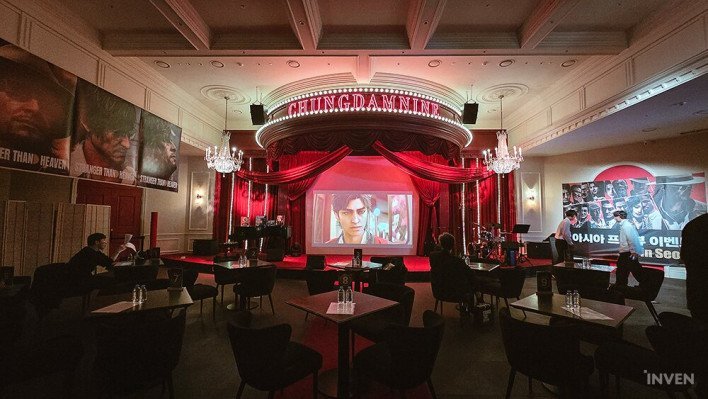
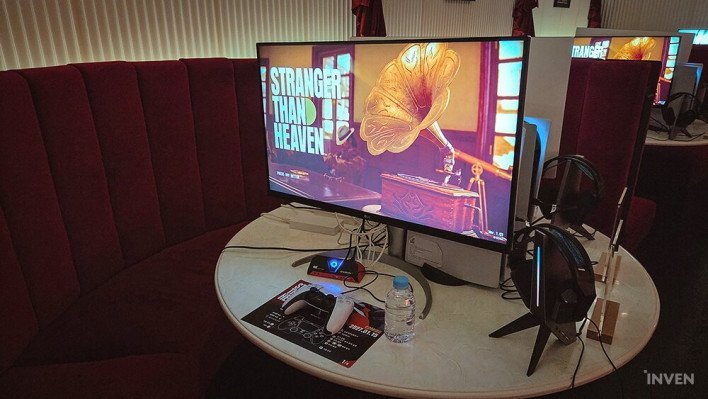
RGG Studio unveiled its upcoming title Stranger Than Heaven at an Asia Preview event on November 27, offering domestic media an extensive hands-on experience spanning roughly two hours. The demo showcased gameplay across multiple eras—from a prologue set in San Francisco through 1915 Kokura, 1929 Kure, and 1943 Osaka—allowing attendees to sample exploration, combat, narrative sequences, and entertainment management mechanics.
The game chronicles five decades in the life of Makoto Daito, a mixed-race protagonist navigating modern and contemporary Japan across five distinct cities and time periods. Daito's journey begins in San Francisco, where he faces discrimination before boarding a ship to Japan. Upon arrival in 1915, he encounters Orpheus, a character voiced by Snoop Dogg, and Yu Shinjo, who becomes both lifelong friend and rival. The early narrative emphasizes Daito's struggle with identity and belonging—rejected in America for his dark hair and in Japan for his blue eyes. Early cutscenes depict his imperfect Japanese and the prejudice he encounters as he seeks work at a trading company.
The prologue immediately impressed with its cinematic presentation. Opening credits paired Daito's desperate escape with peaceful jazz music, using varied fonts and text placement to elevate what could have been a simple walking sequence into something resembling a film opening. The game employs a noticeable film grain effect throughout cutscenes, creating an intentional cinematic aesthetic without causing eye strain. Close-up shots render facial expressions and skin textures with considerable detail, while the overall visual palette shifts by era, with green tones and high contrast defining the atmosphere. Some main cutscenes ran uninterrupted for over ten minutes, such as Daito's first meeting with a character named Tae.
Exploration sections introduced free-roaming elements across relatively compact maps enhanced by scattered fast-travel points. Players could advance the story, engage warehouse guards in combat, or participate in era-specific minigames with adjustable difficulty settings ranging from beginner to advanced. Various activities populated each area—dining at eateries, testing different weapons, and discovering interactive locations.
Combat represents one of the game's defining features, employing an unconventional control scheme where L1, L2, R1, and R2 each control the protagonist's individual limbs. This system creates a realistic, demanding experience that requires significant practice to master. Timing guards and dodges according to enemy attack directions adds substantial complexity. Successfully executing a perfectly-timed guard or dodge in the correct direction provides clear tactile feedback and a genuine sense of accomplishment. The demo suggested the game runs slightly slower than an earlier June showcase, allowing one-handed weapons to feel more balanced against heavier alternatives. Slower weapons deliver powerful individual strikes but require careful positioning to land hits. Alternating L1 and R1 triggers weapon-specific combos, while holding buttons executes charged attacks that drain opponent stamina. Players can guard mid-combo by holding the guard button. Each weapon category features distinct attack speeds and control feels, encouraging experimentation across different eras.
The show business pillar emerged as equally substantial. In Osaka, players gathered ambient sounds throughout the city using a Focus Mode toggle, collecting audio inspiration from shops, telephone poles, and street environments. Combat also generated temporary sound orbs that could be harvested mid-battle. These collected sounds fed into song creation alongside a character named Takashi. Players arranged music, selected tracks and performers, configured stages, and determined overall show vibes. Pre-show promotional activities—posting flyers and negotiating billboard placements—boosted audience draw and event buzz. During live performances, simple button prompts increased performance scores. However, staging costs proved substantial relative to profits, requiring careful financial management. Venue capacity varied, with attendance depending on promotional effectiveness. Composition skill leveling unlocked new musical vibes and elements, allowing players to modify individual song sections and adapt arrangements to match venue requests.
Despite the extensive two-hour preview, attendees felt the time insufficient to fully explore the game's depth. The combination of narrative, combat mechanics, and entertainment systems suggested considerably more content awaited beyond what the demo revealed.
Stranger Than Heaven launches January 15, 2027, across PC, PlayStation 5, and Xbox Series X|S.


2 thoughts on “Stranger Than Heaven blends combat, music in sprawling”