
The Evolution of Wireless Gaming Controllers
 James Whitfield
3 min read
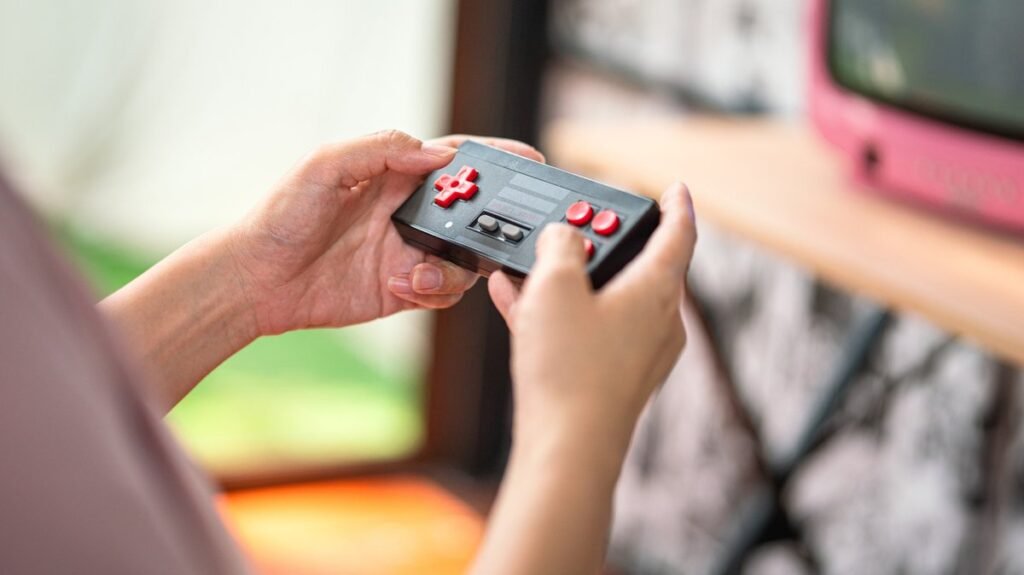
Wireless gaming controllers have existed since the early 1980s, though the technology took several decades to become reliable and mainstream. The journey from those early experiments to today's seamless wireless pads reveals how persistent engineering challenges were eventually overcome.
The Cynex Game Mate 2, released around 1982 for the Atari 2600, holds the distinction of being the first wireless console-compatible gamepad. This pioneering peripheral used radio frequency technology rather than infrared, giving it a significant advantage over later competitors. Unlike infrared controllers that required a direct line of sight to the console's receiver, the Game Mate 2 could maintain a connection from up to 20 feet away without obstruction. However, the device had substantial drawbacks. It was heavy and bulky, essentially a standard Atari controller mounted on a weighted base, and it consumed 9V batteries at an alarming rate. Atari eventually took over distribution and rebranded the peripheral as the CX42 Remote Control Wireless Joystick.
Infrared technology became the dominant wireless standard for many years, despite its limitations. The Acclaim Remote Controller, which launched for the NES in 1989, exemplified this approach. These IR pads suffered from the same constraint as television remotes—they needed a clear line of sight to function properly. Any obstruction between the controller and the console's receiver would interrupt the signal, making them impractical for many gaming scenarios.
The wireless controller landscape remained largely unchanged until Nintendo introduced the WaveBird for the GameCube in 2002. This was the first mainstream wireless pad that delivered a genuinely usable experience without major compromises. The WaveBird employed 2.4GHz radio frequency technology, a significant technological leap forward. With a minimum range of approximately 20 feet, it finally gave players the freedom to move around the room during gameplay. The controller was notably bulky and required a chunky receiver to be plugged into the console, with channel matching via sliders on both devices. To preserve battery life, Nintendo omitted rumble functionality, but the tradeoff proved worthwhile—the WaveBird could run for up to 100 hours on two AA batteries. For multiplayer sessions, this represented a revolutionary improvement, allowing players to spread out rather than crowding around a single couch.
Sony entered the wireless controller market considerably later. The company's first wireless peripheral arrived with the PlayStation 3 in 2006, in the form of the Sixaxis controller. Rather than being a triumph, the Sixaxis became one of Sony's most controversial gamepad designs. The controller abandoned rumble functionality in favor of motion controls that were poorly implemented and underutilized. Sony's reasoning, articulated by a company executive at the time, was that rumble represented outdated technology. This decision proved deeply unpopular with players who valued haptic feedback. Games like Lair, which heavily relied on the motion control features, were widely criticized for their clunky implementation. The backlash was swift and decisive. Sony quickly reversed course, introducing the DualShock 3 in 2008, which restored rumble functionality while retaining motion capabilities. Subsequent titles like Ratchet & Clank Future: Tools of Destruction demonstrated that the two features could coexist effectively.
The evolution of wireless gaming controllers reflects broader trends in consumer electronics. Early attempts prioritized novelty and freedom of movement but sacrificed reliability and battery efficiency. The WaveBird represented a turning point where the technology matured enough to deliver a genuinely superior experience compared to wired alternatives. By the time the PlayStation 3 generation arrived, wireless had become the expected standard rather than a luxury feature. The mistakes made with the Sixaxis—prioritizing one feature at the expense of another—highlighted how consumers had developed clear expectations for what wireless controllers should deliver.
Today's wireless controllers benefit from decades of refinement. Modern pads offer exceptional range, minimal latency, extended battery life, and full feature sets including haptic feedback and motion controls. The journey from the Game Mate 2's 20-foot range and rapid battery drain to contemporary controllers demonstrates how persistence and iteration eventually solve even stubborn technical problems. What began as an experimental novelty in the early 1980s has become the standard way gamers interact with their consoles.