
iPhone Duo hands-on: Apple’s boldest device yet
 James Whitfield
2 min read
James Whitfield
2 min read
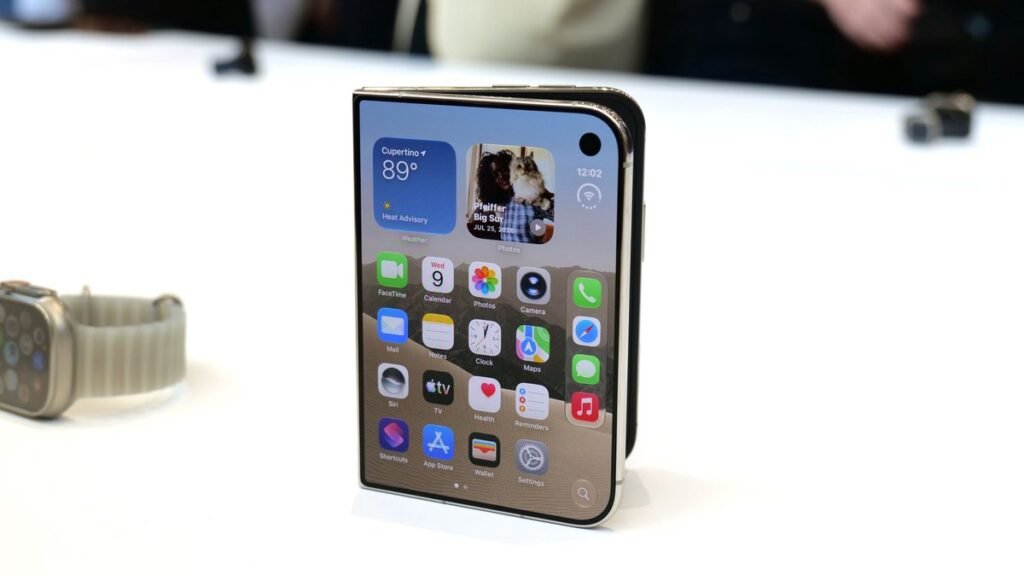
Apple has unveiled its first foldable smartphone, the iPhone Duo, marking a significant departure from the company's traditional design philosophy and potentially its most ambitious hardware release in nearly a decade.
The device features a 5.4-inch OLED display on the exterior and a larger 7.6-inch flexible OLED panel inside. The overall design draws comparisons to existing foldable phones like the original Pixel Fold, but with refinements to the chassis and hinge mechanism. Rounded edges on the sides make opening the device intuitive, and the transition animation between the outer and inner displays features subtle gradient and depth effects that create a polished user experience.
Constructed from titanium with IP68 dust and water resistance ratings, the iPhone Duo does carry some trade-offs in terms of weight and thickness. At 254 grams and 11.3mm when closed, it is noticeably heavier and thicker than Samsung's Galaxy Z Fold 8, which weighs 201 grams and measures 9.7mm in its closed state.
The interior surface uses a matte nano texture finish that serves multiple functions. It reduces reflections significantly and helps minimize the visibility of the device's center crease, which remains present but is subtle enough that it is often easier to feel than see. A standout feature is an under-display FaceTime camera that becomes nearly invisible when inactive. This technology, which Samsung previously explored on the Galaxy Z Fold 3 in 2021, represents a notable technical achievement. The camera is only visible upon close inspection, where the circular pixel array above it appears glossy against the matte display surrounding it.
Apple has also designed the matte interior display to support stylus input across both screens using the Apple Pencil. The textured surface is intended to provide a natural writing experience, though the company did not have styluses available during hands-on demonstrations, preventing immediate testing of this functionality.
The iPhone Duo represents Apple's entry into the competitive foldable smartphone market, a category the company has largely avoided until now. The device's refined engineering and attention to detail suggest a carefully considered approach to the form factor, though questions remain about long-term durability, pricing, and how it will perform compared to established competitors.