OLED monitors and CRT simulation chase lost display clarity
 James Whitfield
3 min read
The pursuit to recapture what was lost when the technology industry abandoned cathode ray tube monitors has become an obsession for display enthusiasts and software developers. While LCD screens of the 2000s offered sharper colors and thinner profiles than their CRT predecessors, they sacrificed something fundamental: the natural motion clarity that made fast-moving objects appear crisp rather than blurred.
Mark Rejhon, founder of Blur Busters, a website dedicated to analyzing display technology, notes that generational memory plays a role in how people perceive this loss. Those old enough to remember CRTs recall their superior motion handling, while younger users who never experienced them have no baseline for comparison. For decades, the industry has been chasing a way back to that lost quality.
The hardware foundation for this comeback is finally falling into place. Modern OLED monitors, particularly those with refresh rates exceeding 240 Hz, offer the necessary technical characteristics to simulate CRT behavior. Unlike LCD panels, OLED displays can achieve true blacks since each pixel generates its own light, and they can reach extreme brightness levels. The high refresh rates allow these monitors to mimic the electron beam that would scan across a CRT screen to draw the image line by line.
In late 2024, Rejhon unveiled a breakthrough algorithm designed to simulate CRT tube behavior on high-refresh displays, developed in collaboration with a former graphics engineer. The technique recreates the visual phosphor fade characteristic of CRTs—a gentler effect on the eyes compared to the harsh black frame insertion method previously used to reduce motion blur. The algorithm works by making a 60 frames-per-second game appear as smooth as one running at 540 frames per second, without requiring the massive computational power such framerates would normally demand.
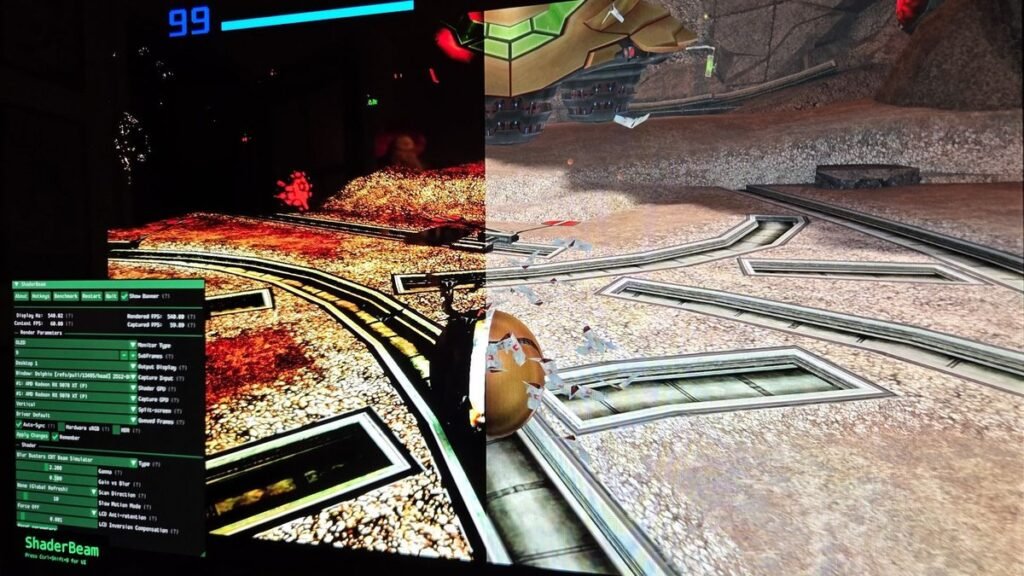
Implementing this technology has proven extraordinarily complex. ShaderBeam, a Windows overlay tool, represents the first practical application of the CRT simulation algorithm. However, the software requires extensive configuration to function properly. Users must disable variable refresh rate technology, adjust graphics driver settings, disconnect secondary monitors, modify system registry entries, and even distribute rendering tasks across multiple GPUs to achieve stable results. The fundamental issue stems from Windows itself: the operating system's scheduling algorithms and GPU driver architecture were never designed to provide the precise timing synchronization that CRT simulation demands.
Developer Mausimus, who created ShaderBeam, explains that the tool operates at a severe disadvantage compared to hardware manufacturers. It must use screen capture and window transparency—technologies never intended for this purpose—to compensate for its inability to directly integrate into the rendering pipeline. This makeshift approach leaves the software vulnerable to unpredictable resource allocation from the operating system and GPU drivers.
Despite these obstacles, when properly configured, the results are striking. Games locked at 60 frames per second display noticeably sharper details during camera movement and on moving objects. The effect is difficult to capture on camera and imperceptible on displays below 240 Hz, but those who experience it report a dramatic improvement comparable to jumping from 30 to 60 frames per second in a modern game. Textures remain visible during motion rather than blurring together, and the overall visual experience feels more responsive and clear.
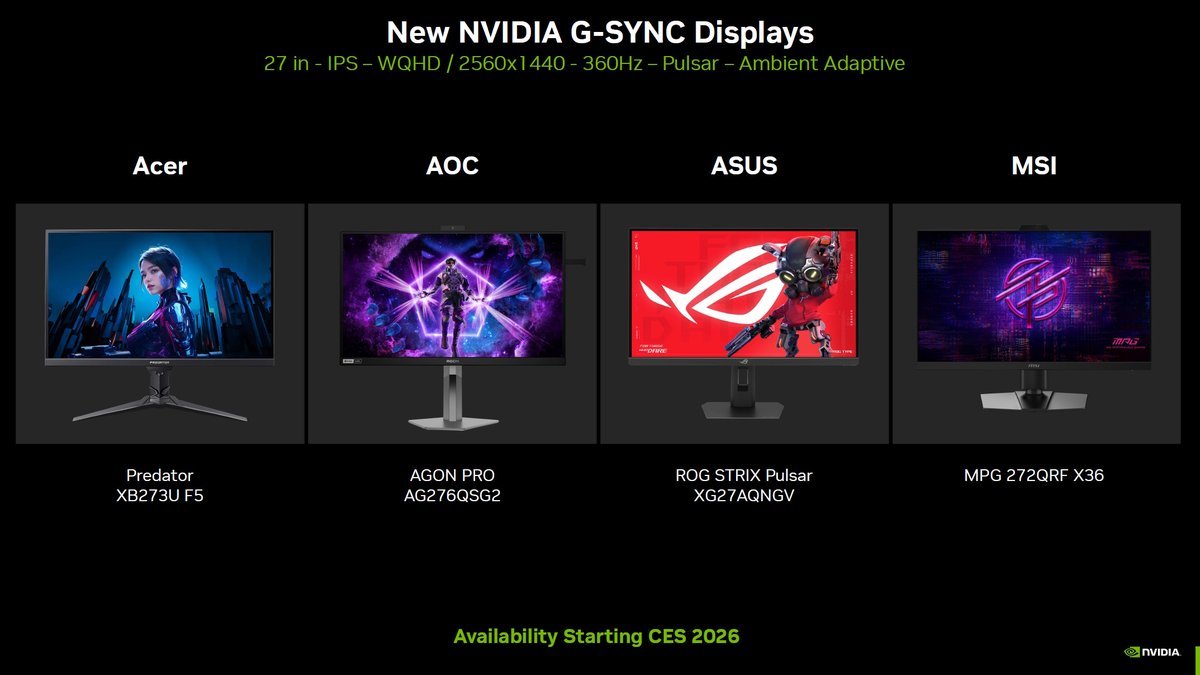
The long-term solution likely requires intervention from major technology companies. Nvidia has already begun this effort with G-Sync Pulsar, a hardware implementation that uses backlight strobing combined with a rolling top-to-bottom refresh cycle to achieve perceived clarity of 1,000 Hz. However, this technology currently lacks OLED support and remains exclusive to Nvidia graphics processors. Industry observers predict that meaningful progress will require Microsoft to modify Windows itself, integrating shader hooks directly into the operating system and allowing GPU manufacturers to build proper support for CRT simulation into their drivers and display hardware. Until that happens, reclaiming the motion clarity of CRTs remains a technically impressive but practically demanding endeavor reserved for dedicated enthusiasts willing to spend hours troubleshooting their systems.