11 Best MAPPA Anime Beyond Jujutsu Kaisen
 James Whitfield
4 min read
James Whitfield
4 min read
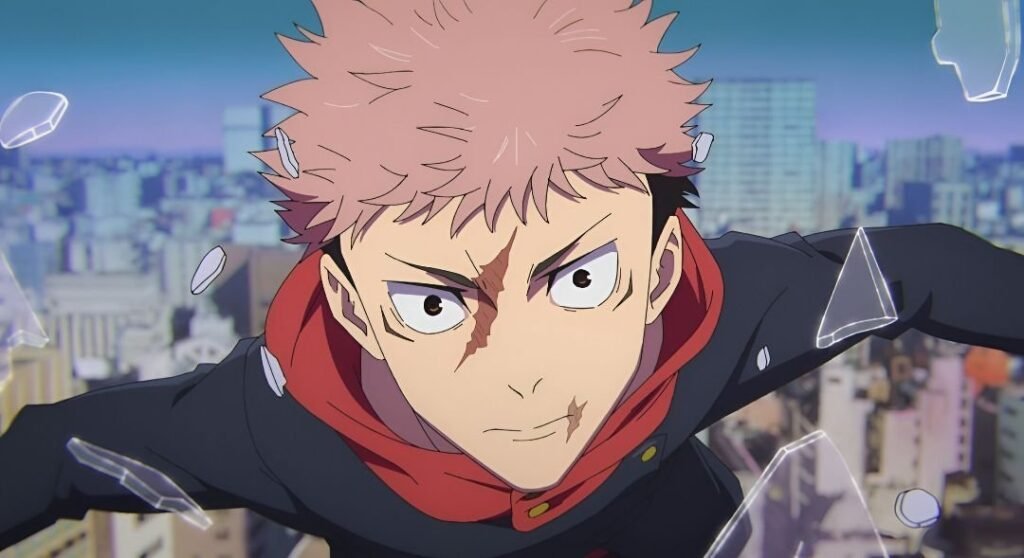
Studio MAPPA has become synonymous with high-octane anime blockbusters, but the studio's catalog extends far beyond its most famous franchises. Founded in 2011 by Masao Maruyama, a co-founder of Madhouse, MAPPA was originally conceived as a creative refuge where acclaimed directors could pursue passion projects outside the constraints of corporate committees. While the studio has since become a powerhouse behind massive adaptations, its early artistic DNA remains evident in a surprisingly diverse lineup spanning historical dramas, unconventional comedies, and ambitious original works.
Looking past the studio's flagship titles reveals a fascinating range of storytelling. From intimate character studies to genre-bending experiments, MAPPA has consistently demonstrated a willingness to take creative risks on material that other studios deemed unadaptable. These 11 projects showcase the studio's evolution and its enduring commitment to ambitious filmmaking.
In This Corner of the World (2016) stands as one of MAPPA's most emotionally resonant achievements. The film follows Suzu, a young woman in wartime Japan navigating an arranged marriage and family life in Kure, a city located just 15 miles from Hiroshima. Spanning from the 1930s through 1945, the narrative captures everyday moments of joy and resilience amid profound loss and hardship. The film's painterly animation and humanistic approach to depicting wartime life earned critical acclaim both domestically and internationally, establishing MAPPA's capacity for exceptional filmmaking beyond action-driven narratives.
Yuri on Ice (2016) transformed MAPPA's trajectory by becoming a global phenomenon. The figure-skating drama gained widespread recognition for its groundbreaking portrayal of relationships rarely depicted in mainstream sports anime. The production's attention to detail was meticulous—the studio brought in retired ice dancer Kenji Miyamoto to choreograph every routine and even recorded authentic blade scraping sounds from various ice rinks. The series became one of the defining anime of the 2010s and remains arguably the most pivotal television production in MAPPA's history.
Dorohedoro (2019) represents MAPPA's willingness to tackle material previously considered impossible to adapt. Q Hayashida's manga featured sketchy, grimy artwork and grotesque character designs that seemed incompatible with animation. MAPPA's adaptation successfully captured the source material's chaotic blend of horror, dark comedy, and fantasy while establishing a distinctive visual identity. The resulting series embraces creative weirdness and demonstrates the studio's commitment to unconventional storytelling.
Banana Fish (2018) showcases MAPPA's skill in modernizing beloved manga classics. Akimi Yoshida's crime drama follows gang leader Ash Lynx and photographer Eiji Okumura as they uncover a deadly conspiracy. The adaptation balances action, tragedy, and romance to create an emotionally devastating narrative that introduced a new generation to one of manga's most celebrated works while highlighting the studio's strength in character-driven storytelling.
Yuri on Ice's success notwithstanding, MAPPA has proven equally adept at comedy. Zombie Land Saga (2018) follows a group of resurrected girls tasked with saving Japan's Saga Prefecture through pop music. Despite its absurd premise, the series became a surprise hit by blending horror and comedy while delivering genuine character development. The show demonstrated that MAPPA could excel in lighthearted fare as readily as darker dramas.
Inuyashiki: Last Hero (2017) stands as one of the decade's most underrated science-fiction works. Directed by Shuhei Yabuta, the series adapts Hiroya Oku's manga about an elderly man who gains extraordinary powers following a mysterious accident, only to find himself in conflict with a younger recipient who uses those abilities destructively. The anime walks a fascinating line between superhero epic and existential drama, exploring mortality and human connection with rare depth.
Terror in Resonance (2014) marked MAPPA's early ambitions to champion prestige projects. Director Shinichiro Watanabe, the creator of classics like Cowboy Bebop, brought an original concept inspired by 1979's The Man Who Stole the Sun and the atmospheric sound of Icelandic post-rock band Sigur Rós. The resulting 11-episode series tracks two teenage terrorists conducting cryptic attacks across Tokyo. Despite production challenges and a divisive narrative, the series showcased MAPPA's commitment to artistic prestige through Watanabe's direction, a score by Yoko Kanno, and striking visual design.
Dororo (2019) proved MAPPA's ability to modernize legendary properties. Based on Osamu Tezuka's manga, the remake follows Hyakkimaru, a young swordsman whose body parts were sacrificed to demons before birth. Directed by Kazuhiro Furuhashi, known for Hunter x Hunter and Rurouni Kenshin, the adaptation balances brutal action with emotional character work, transforming decades-old source material into one of 2019's best anime.
Zenshu (2025) represents MAPPA's recent celebration of animation itself. The 12-episode series follows exhausted animator Natsuko Hirose, who becomes transported into a beloved animated film. Created by Mitsue Yamazaki and Kimiko Ueno, the title itself—meaning "Fix All" or "Complete Revision," an industry term for comprehensive animation overhauls—reflects the studio's identity. The series serves as a love letter to anime production while exploring the frustrations and passions that drive creators.
Maboroshi (2023) showcases MAPPA's willingness to pursue ambitious original concepts. Mari Okada's film centers on Mifuse, a Japanese town frozen in time after a mysterious industrial disaster in 1991, where children cease aging and strange cracks form in the sky during emotional disturbances. Using its supernatural premise to explore fear of change during adolescence and grief, Maboroshi stands as one of MAPPA's most ambitious original films, recalling the auteur-driven storytelling that defined the studio's earliest years.