
Astrae Oratio’s Closed Beta Reveals Uncompromising Retro
 James Whitfield
5 min read


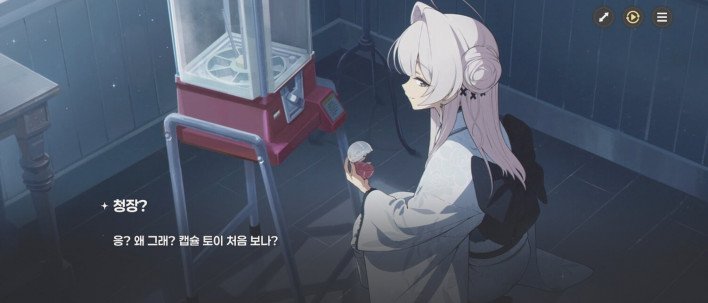
Astrae Oratio, an anticipated action-RPG that generated significant community buzz following its reveal earlier this year, launched its closed beta test in early October after a brief appearance at Tokyo Game Show 2026. The Tokyo demo had offered only about 30 minutes of content, leaving players eager to experience the full scope of what the developers envisioned. The beta confirmed that the studio's ambitions extend far beyond a simple teaser—they are pursuing a singular creative direction with the kind of focused intensity implied by practicing ten thousand identical punches.
The game's defining characteristic is its embrace of the Shindenki genre, a classification that dominated Japanese media from the early 1990s through the late 2000s before being largely superseded by the broader "urban fantasy" label. Shindenki traditionally establishes a boundary between the magical realm and everyday life, allowing both to coexist without the magical world disrupting ordinary citizens' routines. By deliberately choosing this framework, Astrae Oratio immediately establishes itself as nostalgic and deliberately retro. The visual presentation reinforces this approach: character illustrations and models feature thick, distinct pen strokes that contrast sharply with the thin linework common in contemporary titles. Audio design amplifies the effect through period-appropriate sound cues—subway departure chimes, fax machine tones, and the crackling static of VHS tape introductions. Props and environments evoke the late 1980s through early 2000s, creating a cohesive aesthetic that spans both visual and auditory dimensions.
The narrative structure further demonstrates the developers' commitment to their vision. Rather than following the mobile-game formula of brief tutorials followed by stage-by-stage progression, Astrae Oratio forces players through a prologue lasting approximately ninety minutes before advancing to the next phase. This pacing recalls visual novels and suggests an uncompromising dedication to presenting the complete creative vision without concession. The story begins with the player's avatar, called the Chief, being summoned to a mysterious Special District Office after submitting a resignation letter. Commissioner Ai Hiwagishiakari reveals the existence of a magical world and announces an impending purge, thrusting the Chief into a familiar narrative arc: an ordinary person confronted with unfamiliar magical terminology, conflict with an Inner Cabinet, the awakening of a heroine with mysterious powers, and the eventual erasure of all evidence once the crisis resolves. The Commissioner herself evokes comparisons to characters from classic magical-girl narratives, combining a detached, cynical demeanor with cryptic commentary. After this initial arc, the Chief becomes Acting Commissioner and encounters incidents rooted in late Showa and early Heisei-era comedy tropes—misunderstandings, physical comedy, and crude humor delivered by elegant characters as a subversion of expectations. This comedic sensibility may feel unfamiliar to modern audiences, though it aligns with the tone of classic manga and anime from that period.
Combat design represents the game's second pillar of innovation. Rather than employing simple turn-based mechanics where players and enemies alternate actions, Astrae Oratio combines AP-based resource management with real-time input urgency. Players must queue actions before an enemy's action gauge fills, and enemies will act the moment their gauge reaches capacity, even during the player's turn. A combo system allows players to string together attacks until AP is exhausted, though battle skills enter cooldown after a combo concludes, requiring careful sequencing to minimize downtime. The system incorporates a distinctive 1-on-1 tag-team structure: one party member occupies the vanguard while players swap characters on the fly to extend combos or respond to threats. Enemies similarly field one active combatant at a time, tagging in substitutes when defeated or triggered by specific conditions.
Enemy attack patterns demand active reading and response rather than passive skill queueing. Basic attacks can be interrupted with preemptive strikes, while heavy attacks marked with a yellow shield require precise button presses to counter. Red unstoppable attacks cannot be interrupted and instead demand tagging in a Defender-class character to activate defensive tag skills and minimize damage. Purple attacks require tagging in a Breaker-class character to trigger Break status effects and reduce incoming harm. This design philosophy—learning enemy patterns or suffering consequences—recalls recent action-RPGs while incorporating fighting-game mechanics. Team composition becomes critical, as players must understand not only the six available roles (Breaker, Sweeper, Attacker, Supporter, Anchor, Defender) but also individual character traits and their interactions with specific enemy mechanics. Each character possesses a trump card ability called Territorial Declaration that triggers under role-specific conditions, restoring AP, resetting skill cooldowns, and providing distinct buffs. For example, a Sweeper character might activate Territorial Declaration after using battle skills six times, enabling back-to-back fully charged attacks that deal area-of-effect damage to benched enemies.
Despite these innovations, the beta revealed friction points that may hinder accessibility. The standard three-star clearing condition requires completing stages within ten rounds, which heavily incentivizes brute-force damage output over tactical play. While absorbing attacks with a Defender feels rewarding mechanically, pushing maximum damage proves far more reliable for meeting turn limits. The developers introduced Score Trial boss content at level 20 and above to highlight advanced tactics, but the extensive story progression required to reach this content feels abrupt in the current build. Additionally, the user interface prioritizes aesthetic flourish over functional clarity. Text elements and UI components are generally small, prioritizing lore-heavy flavor text over readability. Party formation and setup require manual slot clearing and reassignment rather than simple drag-and-drop reordering, creating unnecessary friction. Unskippable cutscenes play upon every mission entry, and frequent micro-loading transitions—designed to mimic classic anime commercial bumpers—disrupt gameplay pacing and eventually induce fatigue despite their initial charm.
The comedy writing also carries inherent risk. Characters deliver crude jokes and coarse dialogue that served as subversive humor in late Showa and early Heisei media but may jar modern sensibilities. A young woman from a prestigious noble family, for instance, delivers crude testicle humor that inverts player expectations but potentially alienates audiences unfamiliar with that era's comedic conventions. These elements underscore a broader truth about Astrae Oratio: its uncompromising artistic vision will inevitably polarize players. The development team has stubbornly pursued their creative ideals regardless of market trends or player convenience, successfully establishing a vivid identity distinct from competitors in a saturated market. However, this conviction has created friction in areas where established UI conventions exist for good reason. The challenge moving forward is refining these rough edges—improving UI intuitiveness, adjusting pacing during minor encounters, and toning down repetitive visual flourishes—without diluting the sharp artistic identity that makes the game memorable. The beta demonstrated that compelling storytelling and innovative combat mechanics can sustain engagement, but the execution requires further polish to reach its full potential.




1 thought on “Astrae Oratio’s Closed Beta Reveals Uncompromising Retro”