
How Black & White’s iconic creatures were born
 James Whitfield
3 min read
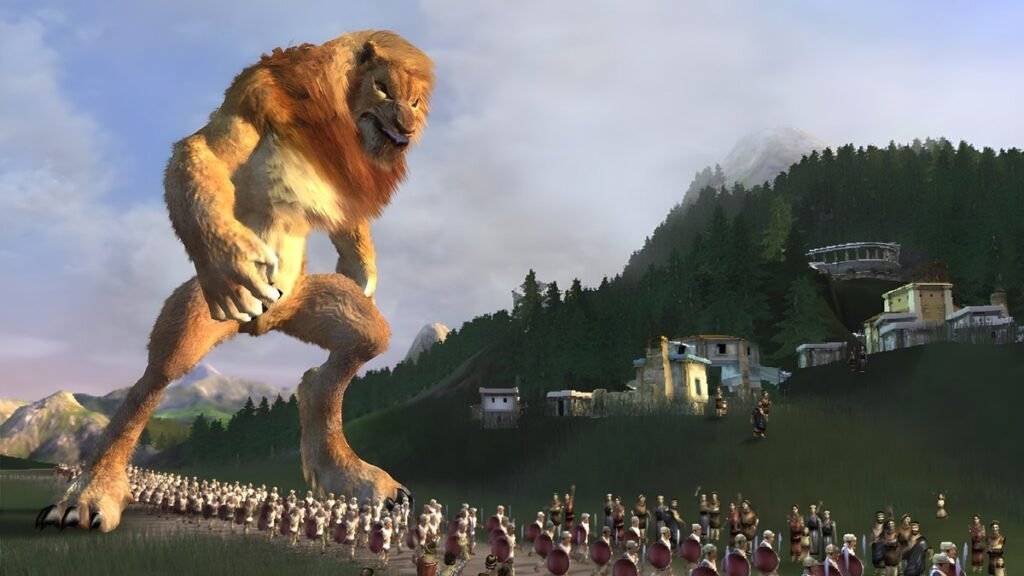
Peter Molyneux has shared the origin story behind Black & White's most recognizable feature: the towering creatures that players nurture and control as a divine force. The legendary game designer explained that the concept emerged almost spontaneously when he founded his new studio immediately after departing Bullfrog Productions in 1997.

Molyneux described the moment vividly, recalling that he left Bullfrog the same day Dungeon Keeper reached gold master status. Within twenty minutes of sitting down with his new team—which included Mark Webley, Tim Rance, Demis Hassabis, and Paul McLaughlin—he articulated the core vision for what would become Black & White. The pitch was remarkably concise: a world where players assume the role of a god, caring for villages and villagers while controlling a powerful creature. Molyneux noted that he had not prepared this concept beforehand; instead, it formed in his mind as he spoke, and he later documented the entire game design on a single sheet of paper.
Crucially, the creature was not originally envisioned as the cute, endearing entity that players would come to love. Molyneux emphasized that it started as a monster—a more menacing concept that evolved through deliberate design choices. The team explored what would genuinely compel players to care for such a being, eventually settling on the idea of a large, distinctive creature. The decision to make it visually striking—whether a giant ape, cow, or absurd turtle—was intentional. Molyneux explained that this approach tapped into fundamental design principles: the less players need to be taught, the more intuitive and comfortable the experience feels. A large, cute creature looking up at the player naturally communicates the possibility of nurturing or punishing it without explicit instruction.
This design philosophy became characteristic of Molyneux's broader creative process. He emphasized that his games typically begin with a core idea or feeling rather than exhaustive planning. The team then explores that concept iteratively, discovering features and mechanics as development progresses. This approach has yielded some of PC gaming's most memorable titles, including Populous, Theme Park, Dungeon Keeper, and Fable. However, Molyneux acknowledged a significant drawback: this method makes it extremely difficult to predict completion timelines or identify missing features until late in development.
Black & White exemplified this challenge. Molyneux revealed that the villagers were originally non-interactive elements with no player agency. However, just six weeks before the game was scheduled to reach gold master, he realized during his commute to work that players should be able to pick up villagers and place them near context-sensitive objects. This feature was hastily implemented in the final stages of development, demonstrating how Molyneux's spontaneous creative impulses could reshape a game even as it neared completion.
Now, as Molyneux develops Masters of Albion—which he has described as his final game—speculation surrounds whether his signature titanic creatures will make an appearance. The current version of Masters of Albion does not feature them, but a recent major update called New Beginnings introduced mysterious colossal structures appearing on the game's skyline. The update's official messaging posed a cryptic question about whether these structures represent a connection to the past or a preview of what's to come, sparking discussion among god game enthusiasts about the possibility of the creatures' return. For many players, the prospect of commanding a massive, rotund creature to devastate enemies remains one of the most cherished memories of the god game genre.