
Game Industry Layoffs Hit 34% as AI Adoption Rises
 James Whitfield
2 min read

The gaming industry is experiencing a severe employment crisis even as studios accelerate their adoption of generative AI tools, according to fresh data from the Game Developers Conference's latest industry survey.
The GDC's State of the Game Industry report, which gathered responses from 2,600 video game professionals, found that 34% of developers have been laid off in the past two years, with 68% of those job losses occurring within the last 12 months. The unemployment rate in gaming has surged to 21% this year, up from 8% previously. Among those who lost their jobs, 54% remain unemployed, and 59% of the jobless are based in the United States.
Despite—or perhaps because of—these layoffs, workplace adoption of generative AI has climbed. Forty percent of surveyed professionals now use AI tools as part of their work, up from 36% the previous year. Usage varies significantly by region and demographics. Outside the United States, adoption jumped from 37% to 44%, while domestic usage remained relatively flat at 38%, compared to 36% a year earlier. Workers aged 45 and older showed the highest adoption rate at 54%, an 8-point increase. Men reported using AI tools at nearly double the rate of women, at 45% versus 33%, while those in business operations, marketing, and programming roles showed the highest integration of the technology.
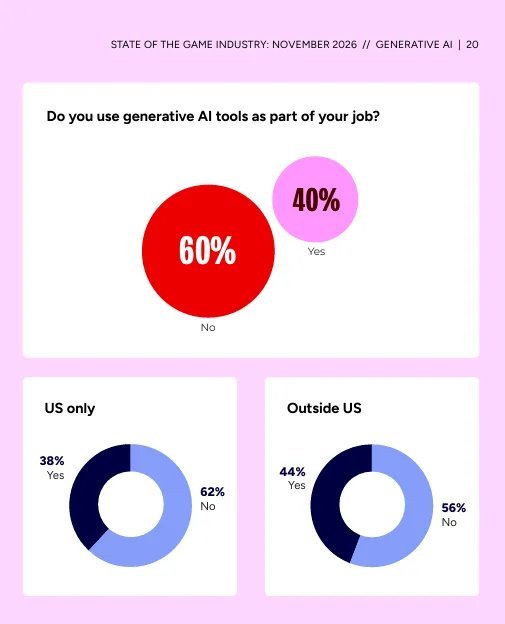
Yet this technological push has not translated to industry optimism. The survey revealed a stark disconnect between executive enthusiasm for AI and developer sentiment. Only 8% of respondents expressed positive views about artificial intelligence's impact on gaming. Another 35% held mixed opinions, while 55% said AI is actively harming the broader industry. The disparity reflects what many describe as a widening gap between leadership decisions and worker perspectives.
The employment crisis has taken a toll on remaining staff. Survivors of the layoffs face mounting workloads, job insecurity, and smaller teams—conditions that have triggered mental health challenges across the sector. In response to deteriorating conditions, labor solidarity among developers has strengthened considerably, with 80% now supporting unionization efforts in the gaming industry.
One Nevada-based indie studio leader captured the frustration in survey comments, noting the contradiction of studios refusing to invest in developing inexperienced talent before terminating them once they gain expertise. The combination of aggressive cost-cutting through AI implementation and widespread job losses has created a tense environment where the industry's future workforce development remains uncertain.