
Monster Hunter Outlanders Hands-On: Two Control Modes
 James Whitfield
4 min read
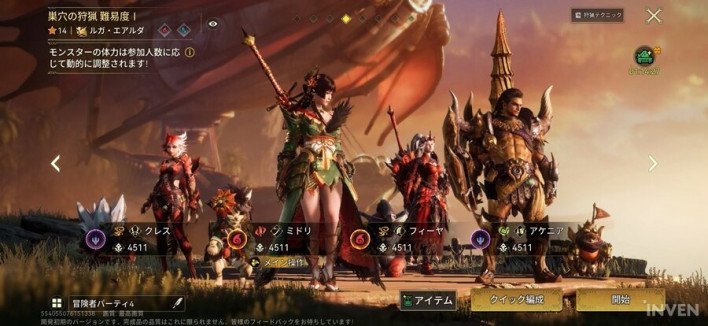
TiMi Studio Group's upcoming mobile title Monster Hunter Outlanders made another appearance at Tokyo Game Show 2026, offering attendees a chance to hunt the game's flagship monster, Luga Ealda, an original Elder Dragon exclusive to this entry. Following the game's third closed beta test, the TGS 2026 build remained largely unchanged in terms of content, but the hands-on demo provided valuable insight into how the game's two distinct control schemes perform in actual combat and what makes Luga Ealda a compelling centerpiece for the experience.
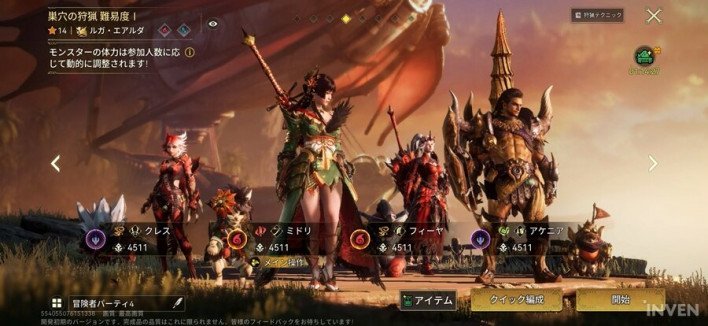
Developed under official license from Capcom, Monster Hunter Outlanders shifts the traditional hunter role to that of an "Adventurer" exploring Isolesia Island. The game operates as a free-to-play mobile title supporting both single-player and multiplayer hunts, with plans for continuous post-launch content expansion. Four regions have been revealed on Isolesia Island so far, each with distinct environments and characteristics. A notable feature allows players to use a crafting system while exploring the field—deploying structures like ropes and wind-generating devices that persist after leaving and returning to areas, easing traversal and exploration. Minigames scattered across the map further diversify the overall experience beyond pure monster hunting.
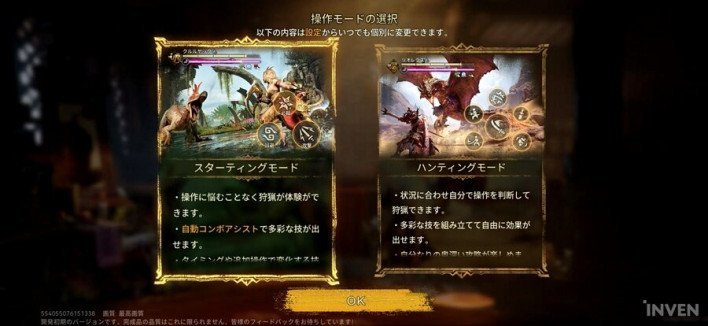
The game's most significant accessibility feature is its dual control scheme system. Adventure Mode mirrors the control layout of traditional Monster Hunter titles, designed for players experienced with mobile action games. Using the Long Sword as an example, separate buttons handle different attack types like Overhead Slash and Thrust, allowing weapon variety similar to the mainline series. Starter Mode, conversely, targets newcomers and those unfamiliar with complex mobile controls. Rather than mapping individual buttons to specific moves, all attacks chain from a single attack button—continuous taps automatically execute combos based on the situation. This mode relies on three primary buttons: Attack, Dodge, and Ultimate, enabling diverse actions without intricate inputs.
Mobile-specific hunting mechanics include automatic camera tracking of monsters and a lock-on wheel system. Holding the lock-on button displays targetable body parts—head, wings, forelegs, hind legs, and tail—allowing players to select specific zones for focused damage. However, selection does not guarantee hits; manual positioning remains necessary as in traditional Monster Hunter games. To ease mobile difficulty, visual telegraphs appear when monsters prepare attacks, with glowing effects helping players gauge timing for dodges.
The game features seven weapon types currently, with more planned post-launch. Adventurers fall into three roles: Assault for high-damage dealing, Disruptor for inflicting debuffs, and Support for ally assistance. The customizable base Adventurer offers weapon and role flexibility, while companion Adventurers feature fixed roles, weapon types, and exclusive Ultimate skills, specializing them for particular functions and sometimes outperforming the base character in specific scenarios.
Monster rosters include returning species from past Monster Hunter games, Radiant variants altered by Isolesia Island's unique substances, and original creatures. Luga Ealda, the Light-Prism Dragon, serves as the flagship monster with golden scale-like armor and special in-game significance. Its backstory and broader island lore will be fully introduced at launch. Another original addition is Estrellian, alongside returning monsters from Monster Hunter Online.
During the hands-on hunt against Luga Ealda, both control modes performed surprisingly well despite mobile platform limitations. Adventure Mode required alternating button presses for Long Sword combos—Overhead Slash, Thrust, and Rising Slash—with Spirit Gauge management adding depth. Dodge timing windows felt generous, likely accounting for mobile precision challenges, and successful evasions triggered subtle slow-motion effects signaling correct timing. The lock-on wheel made targeting specific monster parts straightforward even on smaller screens. Starter Mode compressed multiple inputs into single-button mashing, automatically chaining expected combo sequences, though companion Adventurer Ryunosuke displayed surprisingly unique attack animations and unexpected skill triggers that differed from standard weapon playstyles.
Ultimate skills, triggered by tapping the character portrait, build during battle and unleash formidable abilities—some nearly guaranteeing heavy monster staggers. A notable improvement involved presentation: previous builds featured full-screen cutscenes interrupting combat rhythm, now replaced with picture-in-picture character cameras in the upper-left corner, preserving visual clarity while maintaining battle flow. Telegraphed attack indicators warned of incoming danger through red glowing effects, though timing occasionally felt inconsistent—some attacks triggered instantly while others involved hovering before charging, with the glow appearing before mid-air charges rather than immediately before the actual strike. This remains a minor refinement opportunity before launch.
Luga Ealda's design, which received mixed reactions upon reveal, appeared less unusual in person. Its core concept as a golden armor-clad Elder Dragon stood out effectively. Two standout attack patterns defined its arsenal: wing-arms forming spear-like golden crystals for devastating thrust attacks, and a counter mechanic allowing well-timed strikes to shatter crystals and stagger the dragon, turning defensive moments into offensive opportunities. The second pattern involved ascending into the air to charge energy, with failure to interrupt within a tight window resulting in a party-wiping blast.
Overall, the demo demonstrated thoughtful adaptation of Monster Hunter gameplay for mobile platforms. Core satisfaction from managing attack windows and evasions against diverse monster patterns remains faithful to the series, while mobile optimizations like streamlined controls, attack telegraphs, and lock-on targeting were carefully integrated for accessibility. The game launches October 29, with remaining polish time to address minor issues like telegraph timing refinement. While some purists may question whether authentic Monster Hunter combat translates to mobile, or debate companion Ultimates and active skills against series traditions, this hands-on experience proved the adaptation worthy of the Monster Hunter name.



1 thought on “Monster Hunter Outlanders Hands-On: Two Control Modes”