
Saber Interactive’s IP Revival Strategy Fuels Studio Growth
 James Whitfield
3 min read
James Whitfield
3 min read
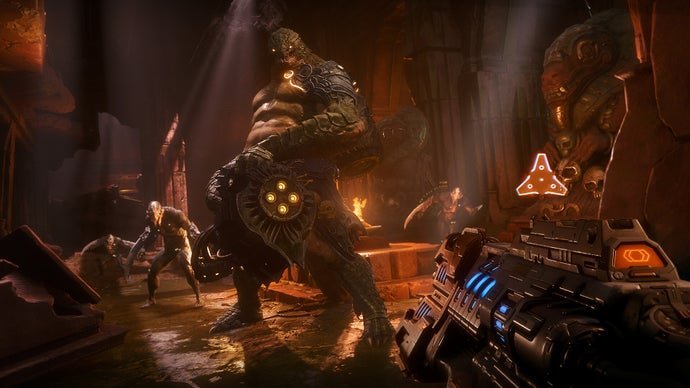
Saber Interactive has emerged as one of gaming's most prolific studios in recent years, riding a wave of momentum that began with World War Z and accelerated through the commercial success of Warhammer 40,000: Space Marine 2. The company's strategy of resurrecting long-dormant franchises—including Turok, Stuntman, and a remake of Star Wars: Knights of the Old Republic—has positioned it as a major player in an industry where extended gaps between releases from established studios have become commonplace.
The studio's confidence in its ability to secure and develop major intellectual properties is evident in remarks from chief creative officer Tim Willits, who stated plainly that Saber can acquire virtually any franchise it pursues. This confidence stems from a disciplined financial approach: the company refuses to greenlight projects unless it believes they can generate returns worth four times their production budget. Willits pointed to Snow Runner, a 2020 driving simulation developed by a small team on a six-million-dollar budget, as a prime example of this philosophy's success. The game has since generated hundreds of millions in revenue, with its downloadable content continuing to perform well.
World War Z exemplifies the same principle. Created by a relatively modest team, the game attracted 32 million players and spawned successful ongoing content updates. This pattern of modest investment yielding substantial returns has become central to Saber's operational model. The studio leverages these predictable, manageable revenue streams to fund larger, riskier projects. Willits noted that smaller titles like Stuntman—which Saber acquired from Embracer and developed in partnership with Universal to bring established franchises to audiences—help bankroll bigger ambitions such as Space Marine 3.
Willits brings decades of industry experience to the role, having spent 23 years at id Software, where he contributed to foundational franchises including Doom and Quake. Early in his career, he worked as a designer on Hexen and Strife in 1996. When asked whether Saber might revive these titles, Willits suggested it would be straightforward to acquire them, though he noted that licensing complications have historically prevented their return. Activision held publishing rights while id Software retained development rights; both franchises are now owned by Microsoft. Willits humorously remarked that he could make the necessary calls to secure these properties, though he joked about being blocked by the relevant decision-makers.
Willits views the vast catalog of dormant franchises held by major publishers as an underutilized resource. He argued that other companies, particularly Microsoft, could replicate Saber's success by dedicating small teams to reviving older properties. He cited examples including MechWarrior and Pitfall, suggesting that assigning even modest development groups to these franchises could yield positive results. According to Willits, Saber's structural flexibility—its ability to rapidly shift teams between projects—combined with its willingness to pursue legacy intellectual property, has been instrumental to its recent growth.
The studio currently has multiple projects in active development. Turok Origins and Clive Barker's Hellraiser: Revival both appeared at Gamescom, while Space Marine 3 remains in development, though details have been sparse since its announcement. A third-person action game based on the John Wick franchise is also in the works. Additionally, Saber is developing Rideshare Simulator, which generated controversy over its use of generative artificial intelligence. Willits characterized the AI implementation as an experimental approach rather than a studio-wide policy, and he expressed optimism that public perception of the technology could shift over time. He suggested that a breakthrough application of AI in gaming—comparable to Half-Life 2's impact on the industry—could reshape attitudes toward the medium.