
Valve’s Deadlock patch notes revive golden age of game
 James Whitfield
3 min read
James Whitfield
3 min read
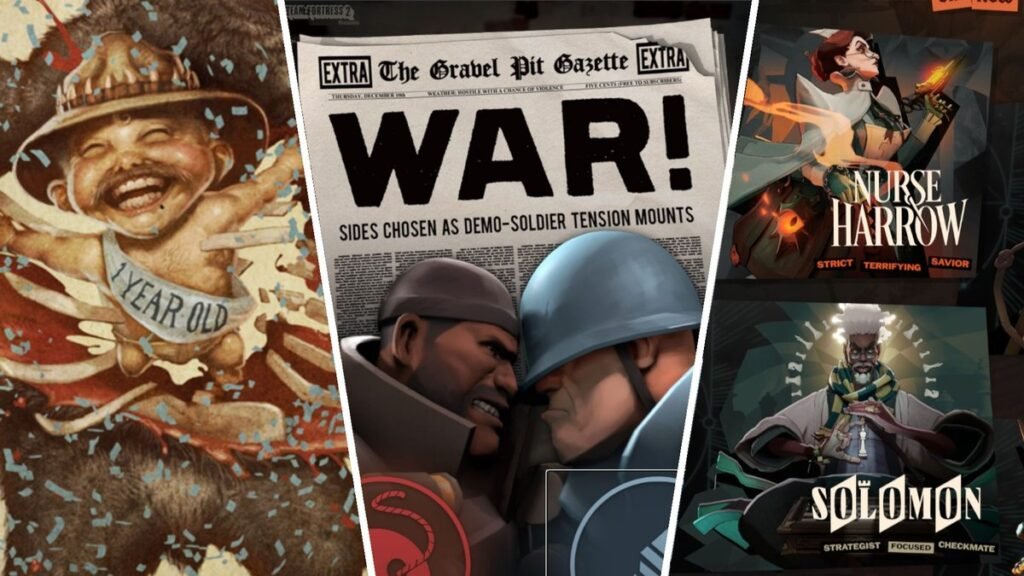

Valve has released patch notes for its multiplayer game Deadlock that stand out not for their mechanical changes alone, but for their presentation as an elaborate tourism brochure for the game's reimagined New York City setting.
The "City Never Sleeps" patch notes guide readers through four major districts—Chinatown, Theater, Haunted Lot, and Plaza—weaving in-world storytelling with technical explanations. Dotted lines connect points of interest as players scroll, reinforcing the map motif, while custom artwork illustrates new items and mechanics. The presentation balances Valve's characteristic humor with genuine information about gameplay updates, creating an experience that feels more like exploring a travel guide than reading a standard changelog.
This approach harks back to a specific era in Valve's history: the golden age of Team Fortress 2 patch notes. Beginning with the 2009 WAR! Update, which pitted Soldier against Demoman in a live kill-count competition, Valve established a pattern of treating post-launch content as narrative events worthy of dedicated, beautifully designed webpages. Each update received its own visual treatment and layout. The Engineer update presented new weapons as blueprints with handwritten notes, while the Scout update debuted gear in a department store catalog. When Valve announced Team Fortress 2's Mac version, it created a minimalist white page styled after early-2000s Apple design.
These weren't formulaic announcements. Valve's design team created bespoke pages for nearly every significant update, shifting color schemes, layouts, and artistic direction with each release. The studio had enough confidence in its direction to wage fictional wars between character classes, introduce crafting systems, and rebrand the entire game as "Scream Fortress" each October. The patch notes themselves became cultural artifacts—fans would eagerly await Thursday or Friday releases, knowing Valve had likely polished changes until the last possible moment.
This creative approach extended beyond aesthetics. Valve accompanied major updates with comic books and original stories that added context to multiplayer maps and new weapons. For a free-to-play shooter in the late 2000s and early 2010s, this level of narrative investment was unusual. The studio treated incremental content updates as events worthy of elaborate movie posters styled after kaiju cinema. Even when Valve faced criticism for introducing paid cosmetics and loot boxes, the studio responded with self-aware humor, releasing a "Hatless Update" that poked fun at its own monetization practices.
In the years since, this approach has largely disappeared from Valve's portfolio. Counter-Strike 2 and Dota 2 receive regular updates, but their patch notes are functional bullet lists without theatrical presentation. Major announcements occasionally receive unique webpages, but the frequency and creativity of the Team Fortress 2 era has faded. That makes Deadlock's patch notes feel almost retro—a deliberate return to a style of game communication that prioritizes player engagement and storytelling alongside mechanical clarity.
The resurgence may reflect something specific about Deadlock's design philosophy. Team Fortress 2 succeeded partly because its arena shooter format allowed for flexibility and absurdist scenarios. The game's over-the-top aesthetic and fictional conflict between Red and Blu factions created space for humor and narrative experimentation. Recent games like Helldivers 2 have achieved similar success by embracing comedic futility in endless warfare, suggesting that certain game types naturally lend themselves to creative storytelling.
Whether Deadlock will maintain this approach long-term remains uncertain. As a multiplayer online battle arena, the game's competitive nature may eventually push Valve toward more regimented, balance-focused communication. The sweat level inherent to MOBAs could lead to patch notes that prioritize mechanical minutiae over narrative flourish. For now, though, Valve has demonstrated that creative patch note design remains possible—and that players still respond to it. The studio's willingness to invest in presentation suggests confidence in Deadlock's direction, even if that confidence may not survive the inevitable balance disputes ahead.



1 thought on “Valve’s Deadlock patch notes revive golden age of game”