Should You Buy a 3D Printer in 2026?
 James Whitfield
3 min read
James Whitfield
3 min read
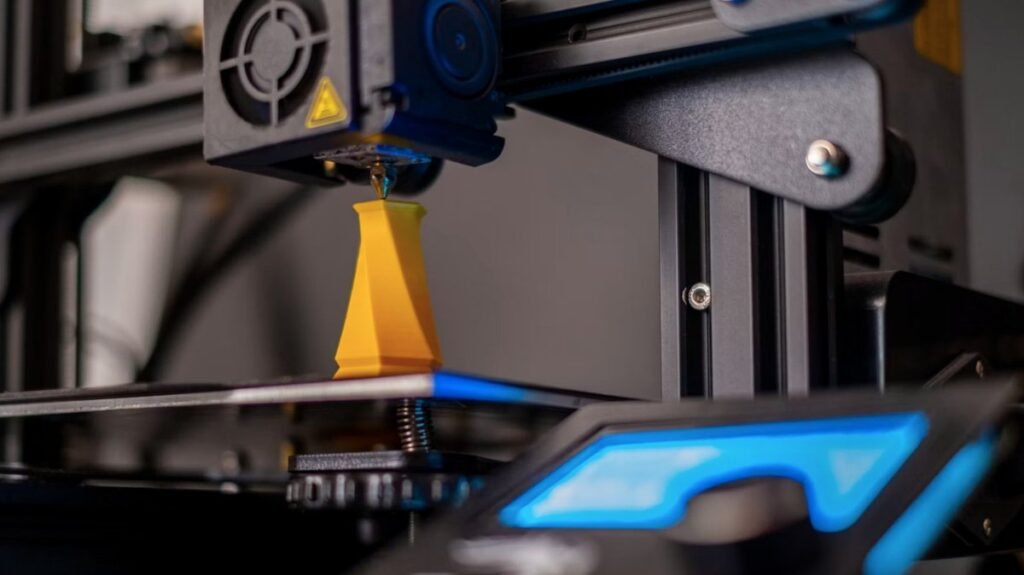
Three-dimensional printing technology has matured significantly since the industry's initial wave of enthusiasm over a decade ago. Today's market offers entry-level machines starting around $200 to $400, with solid mid-range options between $750 and $1,500, making home ownership far more accessible than in previous years. However, affordability alone doesn't answer whether a 3D printer makes sense for your household. The decision hinges on your specific needs, budget tolerance, and willingness to navigate a learning curve.
These devices excel at solving practical, recurring problems. Homeowners frequently use them to manufacture replacement parts—knobs, clips, hinges, latches—that would otherwise require ordering or purchasing new equipment. They're equally useful for creating shims, spacers, and adapters that help fixtures fit precisely in tight spaces. Some users have even ventured into medical applications, producing custom hand braces and similar accessories. Beyond functional repairs, 3D printers enable personalization: custom soap dishes shaped like fish, knife racks tailored to exact kitchen dimensions, or any imaginative object you can design or download.
Tabletop gaming enthusiasts have discovered significant value in 3D printing. The technology allows creation of custom miniatures, terrain, game boards, and storage solutions that enhance gameplay experiences. Resin-based printers produce highly detailed small figures, while filament printers handle larger structures with less precision—making them ideal for terrain and dungeon construction. The financial benefits can be substantial too. While saving a few dollars on a doorstop seems trivial, replacing a camera part that would cost $100 through official channels justifies the investment. Online communities share designs across platforms like Sketchfab, CGTrader, and Free3D, though some designs carry licensing fees.
Prototyping represents another compelling use case, particularly for entrepreneurs and small business owners. Rather than outsourcing designs or paying for shipping, creators can iterate rapidly in-house, testing modifications immediately without external dependencies. The underlying technology continues advancing rapidly. Recent innovations include automatic bed leveling, multi-material printing capabilities, built-in monitoring cameras that halt failed prints early, and significantly faster print speeds than older generations. Calibration, once a major barrier for newcomers, has become largely automated on modern machines.
However, real obstacles exist. Material costs accumulate quickly—filament and resin typically run $15 to $30 per pound, and failed prints waste these supplies entirely. Accessories like replacement nozzles, cleaning tools, and software licenses add up. The learning curve remains steep despite improvements. While auto-calibration handles one traditional pain point, users still must understand slicer software, print orientation, bed adhesion techniques, temperature settings, and troubleshoot issues like dirty nozzles, loose belts, and moisture-saturated filament. Budget beginner models sometimes sacrifice advanced features to simplify operation.
Perhaps the most honest concern is underutilization. Many households simply don't generate sufficient demand for custom plastic components to justify ownership. A printer sitting unused in a closet represents wasted capital and shelf space. Before committing to purchase, prospective buyers should test the concept through local print shops or online services. Ordering a few custom items reveals whether you genuinely need regular printing capability or if outsourcing remains more practical. If experimentation confirms your interest, starting with the most feature-rich, affordable model available provides the best foundation for learning and exploration.
The 2026 3D printer market offers genuine capability at reasonable prices, but success depends entirely on matching the technology to your actual needs rather than aspirational use cases. Those with specific, recurring printing requirements—replacement parts, gaming miniatures, prototyping—will find tremendous value. Casual buyers hoping to occasionally print novelty items should seriously consider whether outsourcing remains more economical and convenient.