
Warhammer Survivors Review: Power Fantasy Beneath The Reskin
 James Whitfield
3 min read
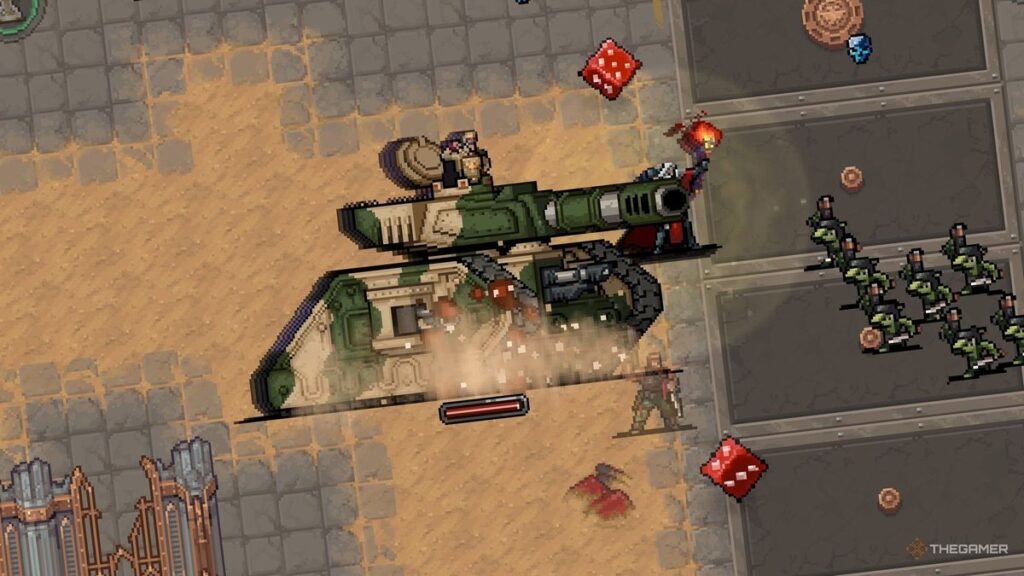
Warhammer Survivors operates as more than a cosmetic overlay on the roguelike survivor genre, though it takes considerable time to prove that point. Developer Auroch Digital's take on the formula eventually transforms into a distinct experience, particularly once you unlock experimental weapons like the tank—a literal armored vehicle that crushes enemies beneath its treads in what would otherwise be a traditional mad-forest scenario.
The core gameplay loop remains familiar to anyone who has played Vampire Survivors or its numerous imitators: eliminate enemies, collect gems, acquire weapons, repeat. Warhammer Survivors follows this structure but with noticeably weightier characters, primarily Space Marines clad in heavy armor. The aesthetic shift makes familiar mechanics feel fresher. Where a standard whip might feel disposable, a chainsword becomes something you refuse to abandon, at least until something more exotic comes along.
The game splits into two distinct campaigns, each with separate progression systems. The Warhammer 40,000 universe offers the sci-fi grimdark setting, while Age of Sigmar provides high-fantasy alternatives filled with rats and other vermin. Initially, both campaigns feel too similar, sharing identical starting weapons and passive abilities. This sameness creates a slog during the early hours, forcing players to retrace familiar steps before the two universes begin diverging into genuinely unique arsenals and stages that reward experimentation.
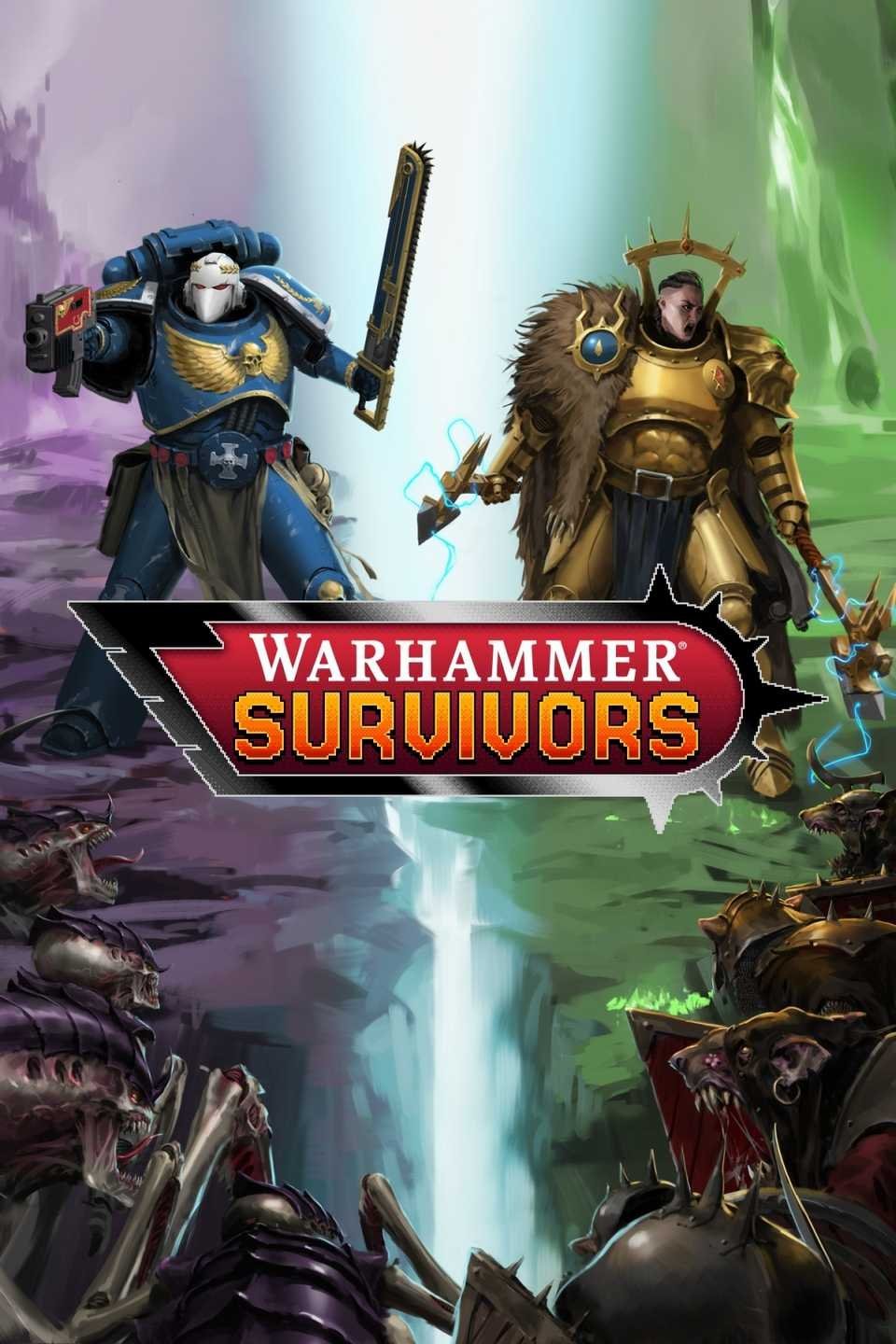
What sets Warhammer Survivors apart from its inspiration is the squad mechanic. Rather than a single character wielding all weapons, different characters specialize in different arsenals. Mages wield the Shield of Faith (the game's answer to garlic), grenadiers lob explosives, Space Marines use chainsaws, and one character literally pilots a tank. This miniature-squad approach mirrors the tabletop experience, reinforced through paint buckets that unlock new characters and a bit-box menu for viewing weapons. However, the mechanic doesn't always work in practice. Weapons like the Shield of Faith become frustrating when they lag behind or drift off-center as troops separate in the chaos, turning the satisfying power fantasy into a squad-management puzzle. The experience improves once evolutions activate and multiple characters become unstoppable forces, but this represents another early-game hurdle that dampens the initial reward loop.
The first several hours lean heavily on Vampire Survivors' foundation, with obvious weapon reskins and passive ability copies. Early-game guides from Vampire Survivors actually apply here, which speaks to how closely Auroch Digital adhered to the template initially. The game functions almost as a texture pack during this phase, imagining how existing survivor-game weapons would appear in Warhammer rather than how Warhammer weapons would function in this genre. This conservative approach feels like a missed opportunity, especially considering how much stronger the experience becomes once the studio takes more ambitious creative swings.
Where Warhammer Survivors genuinely excels is in presentation and atmosphere. The pixel art, thematic interface design, and retro synthwave soundtrack surpass Vampire Survivors' polish. Marching through molten realmstone rivers in the Bloodwind Spoil while hurling poison knives and tempest axes creates genuine immersion in the Age of Sigmar setting. Boss encounters replace the generic Grim Reaper with thematic alternatives like the enormous Norn Emissary tyranid. Ork factions trigger a Waaagh! that summons massive, enraged hordes, grounding the experience in Warhammer lore.
Warhammer Survivors eventually becomes a compelling sandbox where combining different miniature squads produces endlessly entertaining results. The chainsword feels genuinely satisfying to wield, and the tank delivers the absurdist power fantasy promised. However, reaching this point requires patience through an early game that feels derivative and occasionally tedious. The squad system's inconsistency and the slow divergence between the two campaigns create friction that could have been smoothed with more aggressive early differentiation. Despite these stumbles, once the game sheds its Vampire Survivors scaffolding and embraces the outlandish theocratic tyranny of tanks rolling over Poxwalkers, it becomes a moreish experience that justifies the Warhammer license.
Warhammer Survivors launched November 10, 2024, developed and published by Auroch Digital. The game carries an ESRB rating of Everyone 10+ for fantasy violence and mild blood.



1 thought on “Warhammer Survivors Review: Power Fantasy Beneath The Reskin”