
Diablo II Undergoes Radical Fan Transformations
 James Whitfield
3 min read
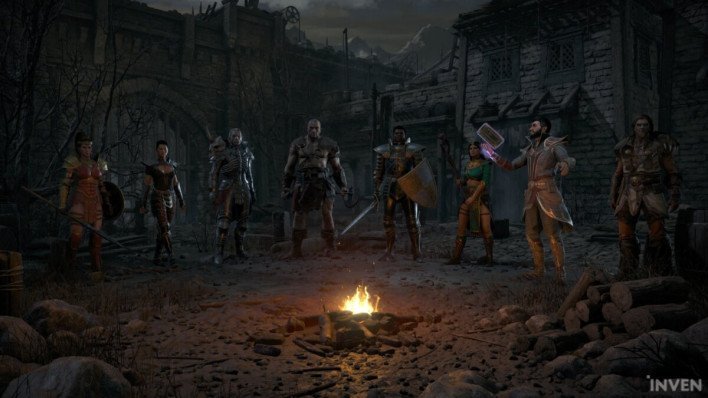
A quarter-century-old action RPG is experiencing an unusual creative renaissance as modders and developers push Diablo II far beyond its original design, experimenting with new genres, perspectives, and control schemes that fundamentally reshape how players interact with the game.
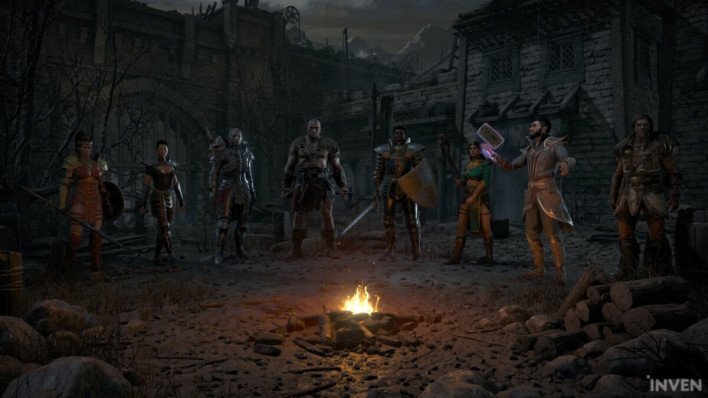
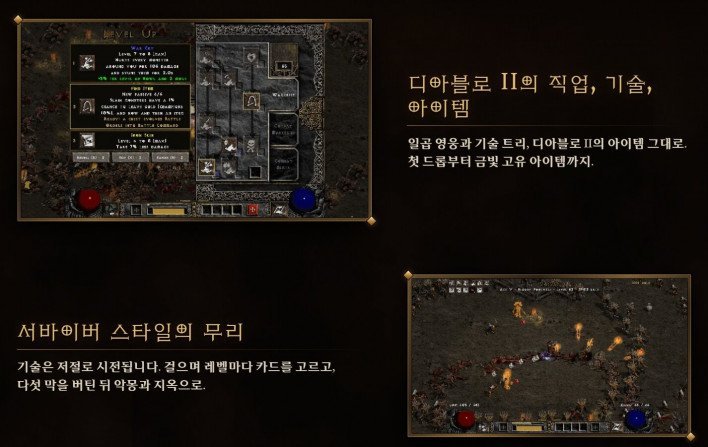
The most visible example is D2 Survivors, a fan-made project that recasts Diablo II as a roguelike in the vein of Vampire Survivors. Rather than the traditional point-and-click combat system, players navigate swarms of demons while abilities trigger automatically, with character progression driven by selecting new powers upon leveling up. Despite this genre shift, the mod preserves the original game's seven character classes, skill trees, and item systems, along with all five acts and higher difficulty modes. The project works by loading assets directly from players' existing copies of Diablo II or Diablo II: Resurrected, making it accessible both as a standalone program and through a web browser at no cost.
Another significant experiment emerged in September when developer emmericp released D2R-3D, a modification that breaks Diablo II: Resurrected's fixed isometric camera. The mod allows players to freely rotate and zoom the perspective, viewing combat from behind their character or up close rather than from above. This transforms the game's presentation into a fully three-dimensional space, though early versions encountered technical hurdles, including crashes triggered by game integrity checks that limited the mod's practical use.
Building on the possibilities opened by D2R-3D, the D2R VR project takes the perspective shift further by enabling virtual reality headset compatibility. Going beyond simply displaying the game in VR, the project implements first-person weapon swinging, bow drawing, and spell aiming through hand motions, converting the isometric hack-and-slash experience into an immersive first-person action game. The transformation illustrates how one technical breakthrough can inspire entirely new directions for the same title.
Graphical enhancement experiments have also emerged alongside these structural changes. A recent video showcased Diablo II: Resurrected with a modified 3D camera combined with Nvidia's DLSS 5 neural rendering technology applied externally. This approach adjusts lighting and material textures without requiring complete recreation of terrain and character models, functioning more as a technology demonstration than a finished feature.
What distinguishes this wave of experimentation is its interconnected nature and rapid succession. Rather than isolated modding efforts, these projects build upon one another—the camera liberation sparked VR development, which in turn influenced other creative directions. This contrasts with traditional mods that add items or balance changes while preserving the original experience. Genre-bending fan projects have precedent, such as Lambda Wars bringing Half-Life 2 into real-time strategy in 2014 or Age of Doom recreating Doom within Age of Empires II's engine in 2021, but the concentrated cluster of experiments around Diablo II stands out for how they feed into each other.
These projects remain experimental and face practical limitations. Structural modifications can introduce stability issues and compatibility problems, while using original game assets raises copyright and terms-of-service concerns. Technical feasibility does not automatically translate to polished gameplay, as altering perspective alone requires corresponding adjustments to combat design and player interaction. None of these projects currently offer a replacement for the original game.
Yet the sheer diversity of reimaginings surrounding a 25-year-old title demonstrates the enduring appeal of Diablo II's foundation. From the endless mouse-clicking of the original to survivor-like dodging mechanics and virtual reality sword swinging, the game continues to inspire creators to explore what it could become. While Blizzard's design may be complete, the community's experimentation with it appears far from finished.