
MapleStory Franchise Propels Nexon to Record Q3 Revenue
 James Whitfield
4 min read
Nexon's third-quarter results demonstrate the company's reliance on its flagship MapleStory franchise, which delivered exceptional growth and helped push overall revenue past 1.1 trillion won for the period ending September 2026.
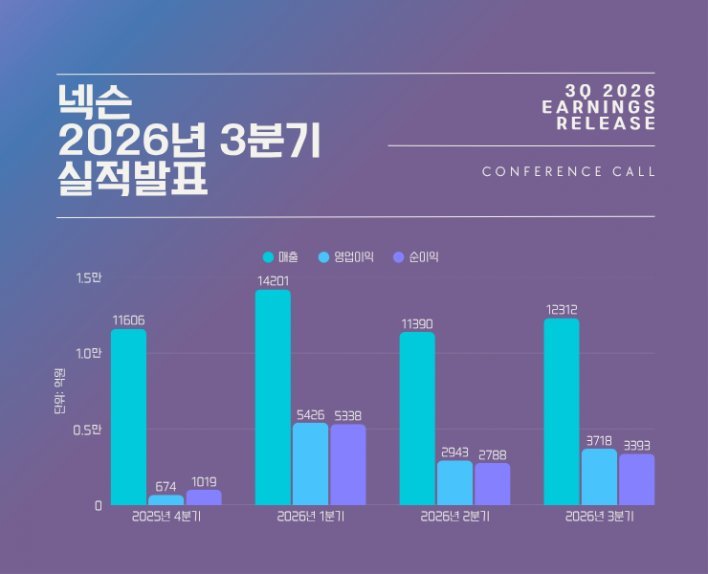
The publisher announced Q3 revenue of 1.1231 trillion won, representing a 17% increase compared to the same quarter last year and a 14% jump from the previous quarter. The standout performer was the MapleStory franchise, which generated revenue that climbed 72% year-over-year and set an all-time quarterly record. Within that franchise, domestic PC MapleStory revenue rose 19%, while the China market saw particularly strong gains, with PC MapleStory revenue nearly quadrupling thanks to the successful launch of MapleStory Classic in that region. The company also noted ongoing contributions from MapleStory Worlds and MapleStory: Idle RPG.
Beyond MapleStory, the FC franchise posted double-digit year-over-year growth, with FC Online breaking its own all-time quarterly revenue record. The action title ARC Raiders, which launched in late 2025, continued to generate steady earnings, with global cumulative sales surpassing 17 million copies. However, not all franchises performed equally. The Dungeon & Fighter franchise saw revenue decline 33% year-over-year, while domestic revenue for Mabinogi Mobile also fell compared to the prior year.
Regionally, Nexon saw revenue increases in Korea, North America and Europe, and other markets, while China and Japan posted declines. Operating income reached 371.8 billion won, up 12% year-over-year and 34% from the previous quarter, exceeding the company's own guidance. The stronger-than-expected results came from higher revenues across MapleStory and FC franchises combined with cost reductions in marketing, labor, and cloud infrastructure. However, royalty costs and payment processing fees rose alongside growth in certain titles, and marketing expenses increased due to user acquisition campaigns and promotional efforts. Net income stood at 339.3 billion won, flat compared to last year but up 29% sequentially, boosted by a gain on fund valuation that offset lower finance income.
For the first nine months of 2026, Nexon achieved cumulative revenue of 3.792 trillion won, up 17% year-over-year, alongside cumulative operating income of 1.2088 trillion won and cumulative net income of 1.1513 trillion won—all representing all-time highs for the company's first three quarters. Management attributed this record performance to MapleStory franchise growth and the global success of ARC Raiders.
Looking ahead to the fourth quarter, Nexon projects revenue between 912.2 billion won and 1.0067 trillion won, representing a decline of 4% to 13% year-over-year. The company expects MapleStory to grow approximately 70% year-over-year, while the FC franchise is projected to sustain double-digit growth. However, this outlook reflects the ongoing weakness in Dungeon & Fighter and the high comparison base from ARC Raiders' launch in the fourth quarter of 2025. Several new releases are expected to contribute, including the Japanese service launch of Mabinogi Mobile and titles launching in November. Operating income is forecast at 34 billion won to 99.1 billion won, while net income is expected to range from 39.4 billion won to 89.9 billion won, with the year-over-year decline attributed to a high comparison base from foreign exchange and securities valuation gains in the prior-year quarter.
The company's upcoming release schedule includes Overgeared and Azur Promilia, both launching November 26 across multiple regions. Mabinogi Mobile's Japanese service began last October. The mobile idle game Dungeon & Fighter: Idle RPG has been postponed to the first half of 2027 to allow for additional polish and user experience improvements. Nexon also plans to release Dungeon & Fighter Classic, Vindictus: Defying Fate, and NAKWON: LAST PARADISE in 2027, with additional titles including Godzilla Defense Force X, Dungeon & Fighter: Arad, Project Overkill, Pareidolia, and Woochi the Wayfarer currently in development.
During the earnings call, executives addressed the persistent weakness in Dungeon & Fighter, acknowledging that a major season update launched in April failed to resonate with players. Management revealed that top executives from both Nexon and its Chinese partner Tencent convened for an in-depth workshop to establish structural changes and concrete action plans. Going forward, the companies plan to expand overall content output and incrementally increase the volume of content provided to players, while also improving community management policies and developer-player communication. A detailed presentation of these changes is scheduled for a Dungeon & Fighter player event in China on November 20. Both companies emphasized that Dungeon & Fighter remains a differentiated brand with no direct competitors offering comparable action RPG gameplay. Executives also outlined a franchise expansion strategy that includes Dungeon & Fighter Classic targeting a Chinese release in 2027 and the newly unveiled Project Overkill.
Regarding MapleStory Classic, which significantly exceeded internal expectations in Taiwan, China, and Western markets, executives stated that the growth momentum is expected to continue into 2027. The company noted that player influx in some markets reached up to nine times that of existing live services, with minimal cannibalization between Classic and the existing live service. Nexon indicated that it views the Classic model as a broadly applicable strategy that can be adapted to other long-running franchises such as Dungeon & Fighter and Mabinogi, each with decades of accumulated player history.
On the topic of artificial intelligence adoption, management noted that the company is focusing AI deployment on repetitive development tasks to free up developers for more creative work. Concrete examples cited include using AI to convert artwork into pixel art, accelerating production speed by more than tenfold, and enabling hyper-localization tailored to regional cultures several times faster than traditional methods. However, executives emphasized that actual game products remain human creations, as the industry is fundamentally creative in nature. The company is approaching AI investments carefully and incrementally, evaluating results at each stage before committing to larger-scale deployments.
Nexon also disclosed that it established performance milestones for new projects and introduced a stage-gate development approval process. The company cancelled six existing projects to concentrate development resources on initiatives with higher commercial viability, reallocating budget and staff from cancelled titles to projects with greater growth potential. Despite these changes, overall headcount remained similar to the prior year, kept below initial projections.