
Garriott: Game Industry Lost Its Way After Tech Leaps
 James Whitfield
2 min read
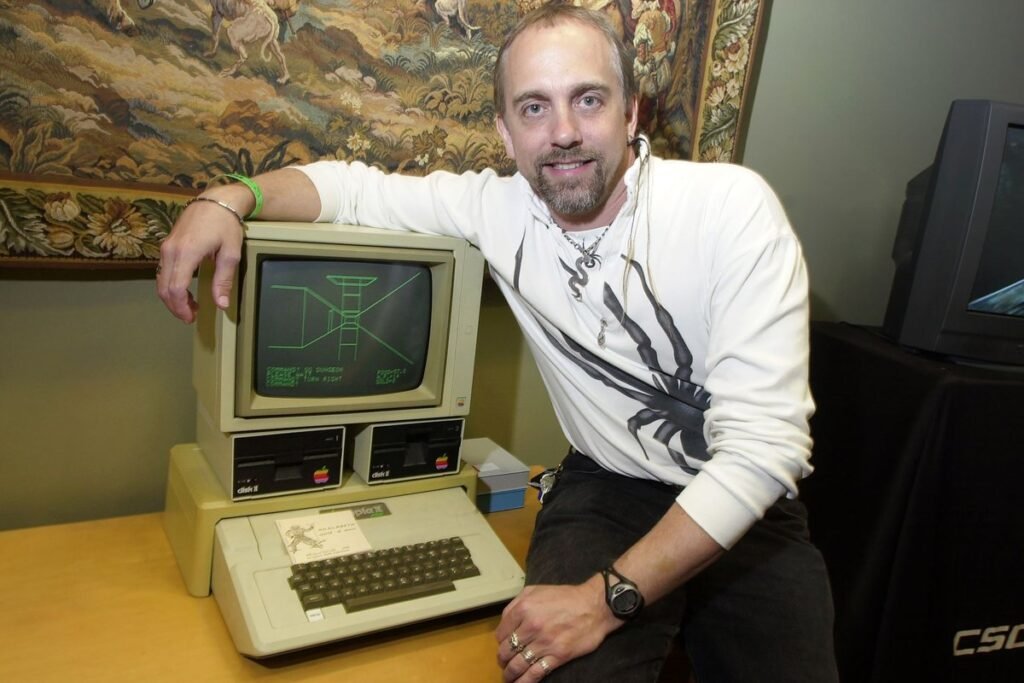

Richard Garriott, creator of the Ultima series, outlined a stark assessment of the videogame industry's current troubles during a panel hosted by the Georgia Game Developers Association, arguing that the sector faces a fundamental creative crisis with no clear path forward.
Garriott identified the industry's problems as multifaceted rather than stemming from a single cause. He pointed to a combination of factors: people unfamiliar with game development attempting to profit from the medium, shifting political climates, and numerous other pressures that have compounded into what he described as an intractable situation. "It's a lot of folks who don't understand videogames trying to make money off of videogames," he explained, noting that these issues have accumulated into a complex tangle difficult to unravel.
Central to his analysis was a historical pattern he has observed throughout his decades in the industry. Whenever a significant technological breakthrough emerges—whether the CD-ROM, 3D rendering capabilities, or internet connectivity—developers converge on creating simple games designed to showcase that innovation. Only in the intervals between these major leaps does the industry focus on deeper, more ambitious creative work. This cycle has defined game development for years, but Garriott believes the industry has now reached an inflection point. With modern hardware powerful enough to handle any creative vision, technological advancement no longer serves as the primary driver of innovation. Instead, developers must rely on genuine creative breakthroughs, and the industry appears unprepared for this shift. "The bells and whistles are no longer what's important," Garriott stated, describing the current moment as a creative impasse where the industry has lost direction.
Garriott attributed part of this stagnation to the departure of veteran creators who originally built major franchises. As these original architects have moved on, larger companies have struggled to maintain the creative vision that made those properties successful. The combination of lost talent and unclear creative direction has left the industry, in his view, fundamentally adrift.
He was equally critical of how major publishers have responded to industry challenges through project cancellations and workforce reductions. Drawing on his experience with Origin Systems before its 1992 acquisition by Electronic Arts, Garriott outlined a different philosophy. Under his leadership, Origin completed projects even when commercial success seemed unlikely, believing that allowing teams to finish their work provided invaluable learning experiences. Completed projects, regardless of sales performance, gave developers concrete feedback and built institutional knowledge that strengthened future efforts. Canceling projects, by contrast, sends a damaging message to development teams that the publisher lacks confidence in their vision, breeding resentment and prompting talented staff to seek opportunities elsewhere.
The contrast between pre- and post-acquisition Origin illustrated his point starkly. Before EA's takeover, the studio completed far more projects than it abandoned. After joining EA, the situation reversed dramatically, with cancellations vastly outnumbering finished titles. Garriott characterized this shift as emblematic of how publisher strategies have shifted away from nurturing creative talent and toward short-term financial optimization, ultimately weakening the industry's long-term creative capacity.