
Battery Capacity vs. Battery Life: What’s the Real
 James Whitfield
3 min read
James Whitfield
3 min read
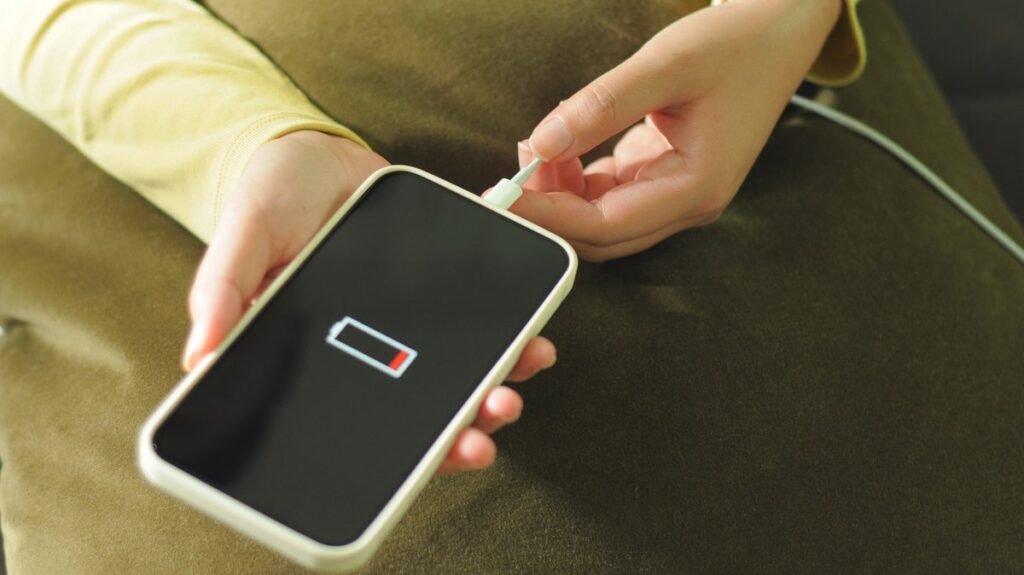
When shopping for a new phone, laptop, or power bank, you'll frequently encounter two battery-related terms that sound similar but measure fundamentally different things: battery capacity and battery life. Understanding the distinction between them is essential for making informed purchasing decisions and knowing when your device's battery needs replacement.
Battery capacity refers to the total amount of energy a battery can store, measured in milliampere hours (mAh) for small devices like smartphones and portable chargers, or watt hours (Wh) for larger devices such as laptops. Battery life, by contrast, describes how long a device can operate before requiring a recharge, typically expressed in hours. While these metrics are interconnected, they don't tell the same story about device performance.
A closely related concept is battery health, which represents your battery's current capacity as a percentage of its original state when new. This metric deteriorates over time based on charge cycles—one cycle occurs whenever a battery depletes from full to empty, whether in one sitting or across multiple partial charges. Manufacturers provide specific expectations for this decline. For instance, Google's Pixel 8a is designed to maintain up to 80 percent of its original battery capacity after 1,000 complete charge cycles, suggesting a battery replacement might be necessary around the 2.5-year mark for daily users.
In theory, a larger battery capacity should translate to extended battery life. A phone with a 5,000mAh battery should outlast one with 4,200mAh on a single charge. Similarly, a 10,000mAh power bank should theoretically recharge a phone with a 4,288mAh battery more than twice over. However, this calculation doesn't account for real-world inefficiencies. Standard charging typically loses 20 to 30 percent of energy, while fast charging and wireless charging incur even greater losses due to heat generation.
Multiple factors beyond raw capacity determine actual battery longevity. Device usage patterns play a critical role—a laptop running demanding video games at maximum graphics settings will drain faster than one used solely for word processing, regardless of battery size. Screen dimensions matter significantly; an iPad's larger display consumes considerably more power than an iPhone's, despite the tablet having a bigger battery. Environmental temperature affects performance too, as phones drain noticeably faster when used outdoors in hot weather. The efficiency of the operating system and hardware components also influences results, which explains why modern Apple silicon MacBooks achieve substantially longer battery life than older Intel-based models.
Because usage varies daily, manufacturers cannot provide perfectly accurate battery life predictions. Companies typically estimate battery life based on standardized video playback tests, with some producers like Apple now including "typical battery life" figures for newer devices. As batteries age and their capacity diminishes, the battery percentage display becomes increasingly misleading. A device showing 100 percent battery after two years of use doesn't perform like a brand-new device at full charge.
Users can extend battery life through practical adjustments regardless of capacity. Keeping devices updated with the latest operating system, reducing screen brightness, disabling unnecessary background processes, and identifying power-hungry applications all help. For long-term battery health, maintaining charge levels between 20 and 80 percent is preferable to allowing complete depletion followed by full recharging. Most smartphones display battery health percentages in Settings under the Battery section, and many devices alert users when degradation becomes significant. Once capacity drops to 80 percent, replacement becomes advisable.
Emerging battery technologies promise improvements in this area. Silicon-carbon batteries currently in development can store larger amounts of energy in smaller, lighter packages, potentially delivering extended battery life without increasing device thickness or weight. However, these innovations remain in early adoption phases and may take years to become standard across consumer devices. For now, understanding the distinction between capacity and life remains the best approach to managing device battery expectations and longevity.