
Asus ROG Rapture GT-BN98 Wi-Fi 8 Router Review
 James Whitfield
3 min read
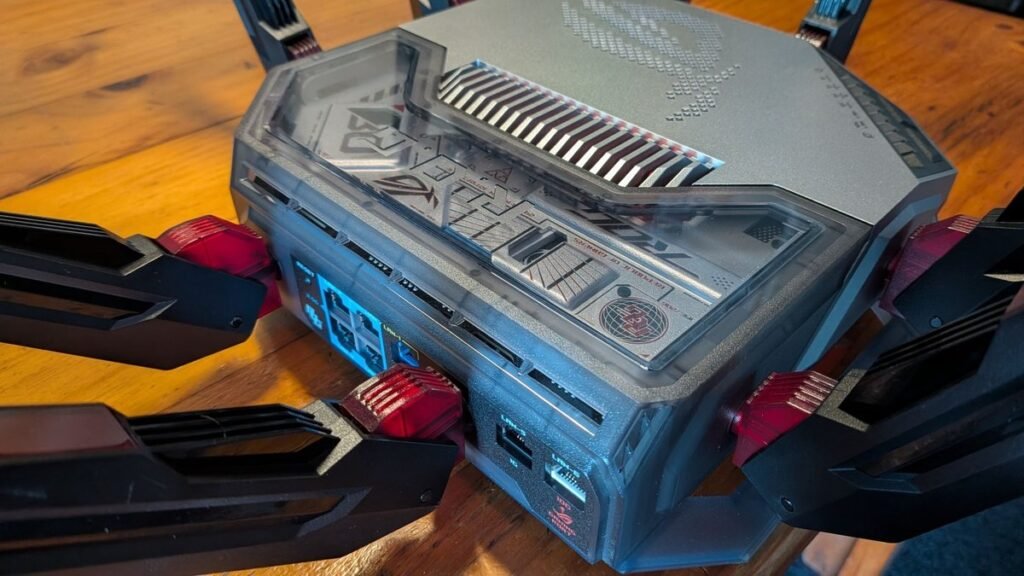
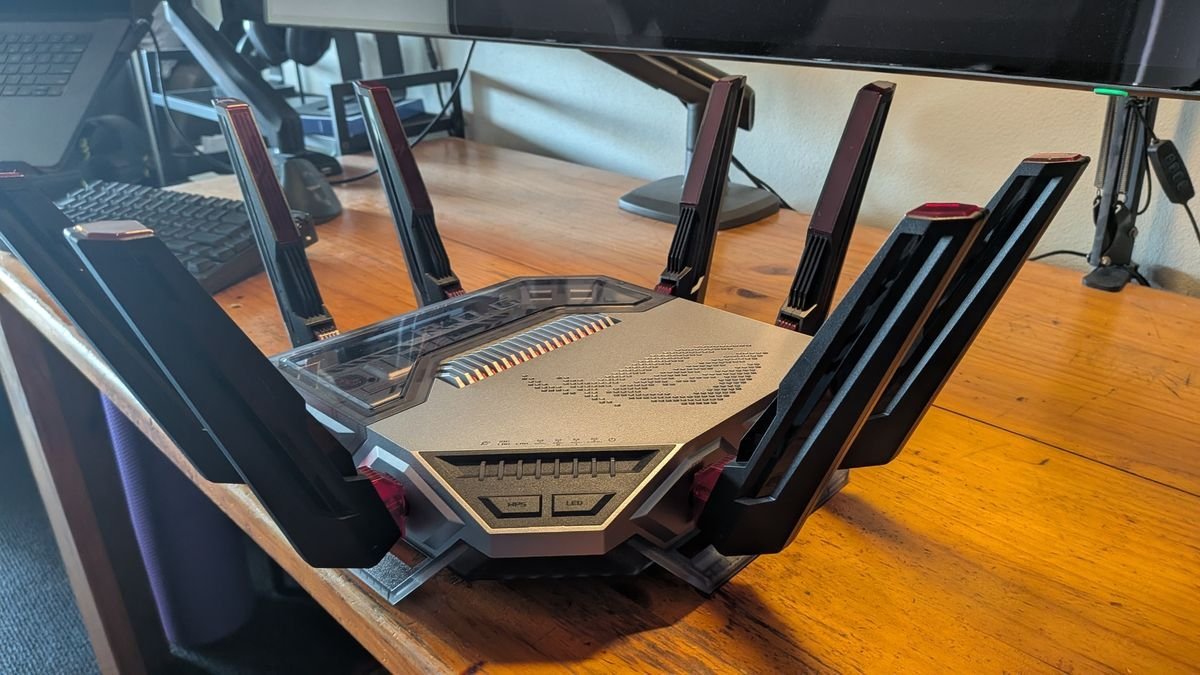
Asus has delivered the first Wi-Fi 8 router to market with the ROG Rapture GT-BN98 Pro, a quad-band device offering 24.4 Gbps wireless speeds and dual 10 Gbps ports. While the new standard won't receive official ratification until late 2028 and compatible devices remain scarce, the router demonstrates meaningful real-world advantages over established Wi-Fi 7 alternatives, particularly at distance.
Unlike previous wireless generations, Wi-Fi 8 prioritizes reliability and signal robustness over raw speed. The standard introduces several key technologies designed to benefit networks with numerous connected devices, gamers requiring low latency, residents in dense apartment buildings, and content creators uploading live footage. Unequal Modulation smooths performance degradation as users move away from the router, rather than causing the sharp drops seen with earlier standards. Enhanced Long Range technology strengthens weak connections through backup data packets, while Distributed-Tone Resource Unit spreads signals across wider spectrum bands to improve both distant connections and upload speeds.
Multi-access point coordination features enable nearby routers to work together more efficiently. Coordinated Beamforming allows multiple access points to share information and identify optimal channels, while Coordinated Spatial Reuse lets them adjust transmission power dynamically to use the same channel without interference. Coordinated Time-Division Multiple Access enables neighboring routers to share transmission slots rather than compete for bandwidth. Additional technologies like Dynamic Sub-Band Operation carve wide channels into smaller blocks for narrow-band devices, and Enhanced Distributed Channel Access reduces access delays for latency-sensitive applications including gaming and video conferencing.
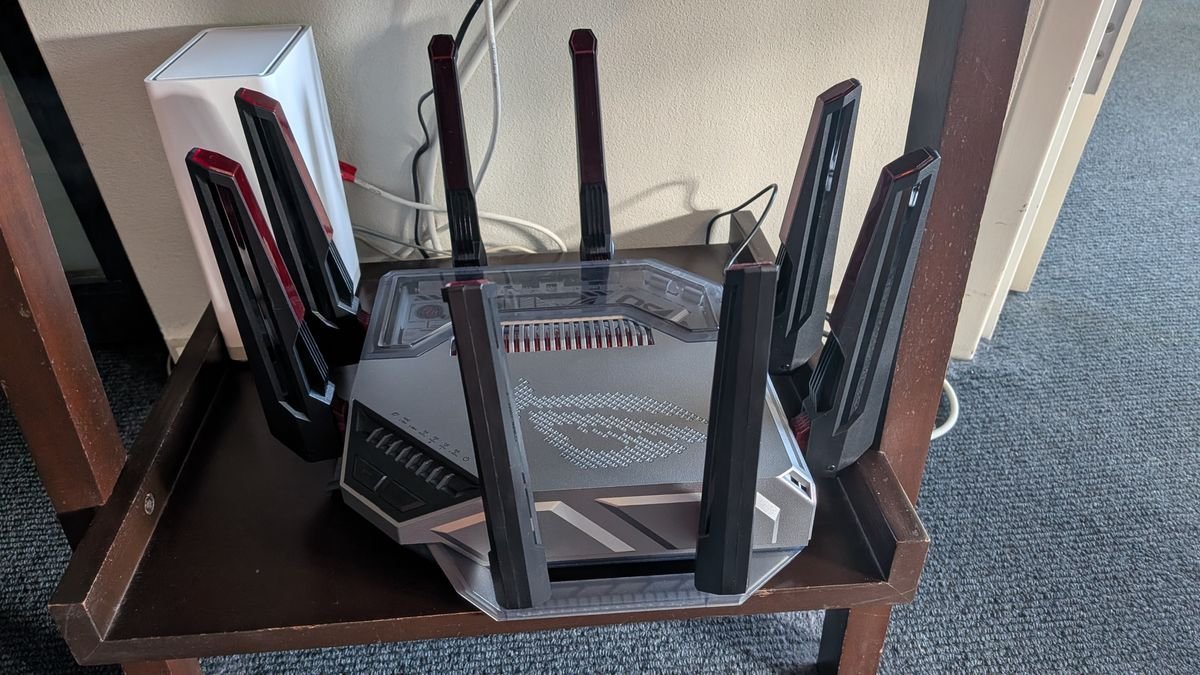
Testing in a Sydney cottage revealed the GT-BN98's strengths and weaknesses compared to Wi-Fi 7 alternatives. Up close to a tethered 10 Gbps NAS, the router achieved 1,788 Mbps—fast, but significantly trailing the older Asus ROG Rapture GT-BE19000AI at 3,052 Mbps and the TP-Link Deco BE85 mesh at 2,500 Mbps. However, performance characteristics shifted dramatically at distance. Two rooms away, the GT-BN98 delivered 894 Mbps, substantially outpacing Wi-Fi 7 competitors which struggled to exceed 500 Mbps at that range. In an outdoor garden setting 15 meters away, the router managed 120 Mbps compared to the BE19000AI's 12 Mbps, though the Deco's multi-node mesh setup reached 280 Mbps.
When tested under load with 4K YouTube and Netflix streaming simultaneously, the GT-BN98 registered 1,647 Mbps up close, 695 Mbps two rooms away, and 120 Mbps outdoors. The Deco achieved 1,526 Mbps, 1,490 Mbps, and 280 Mbps respectively. This demonstrates that Wi-Fi 8 maintains more consistent performance across distances on congested networks, while the mature Wi-Fi 7 mesh system experienced more pronounced speed degradation at high throughput levels.
Beyond performance metrics, the GT-BN98 inherits Asus's extensive feature set. Competitive gamers gain access to automated latency optimization with preconfigured acceleration profiles for computers, consoles, and handhelds. The router includes comprehensive network and device-level security alongside parental controls without subscription fees—an advantage over TP-Link's subscription model. Additional capabilities encompass media and file server functionality with Docker and Portainer hosting support, enterprise-grade VPN features, and compatibility with older Asus routers functioning as range-extending nodes.
Priced at approximately $999, the GT-BN98 occupies a premium position in the market. The functionally identical Wi-Fi 7 predecessor, the GT-BE19000AI, costs $560 less but represents aging technology. The TP-Link Deco BE85 three-node mesh system commands $1,200 and lacks comparable feature depth despite mesh networking advantages. As a first-generation Wi-Fi 8 product, the GT-BN98 sacrifices close-range speed supremacy for superior distance performance and network stability—a tradeoff that positions it as arguably the most well-rounded standalone router available today. However, incoming Wi-Fi 8 competitors from both TP-Link and Asus remain untested, potentially altering this assessment.