
EV Charging Levels Explained: Which One Do You Need?
 James Whitfield
3 min read
James Whitfield
3 min read
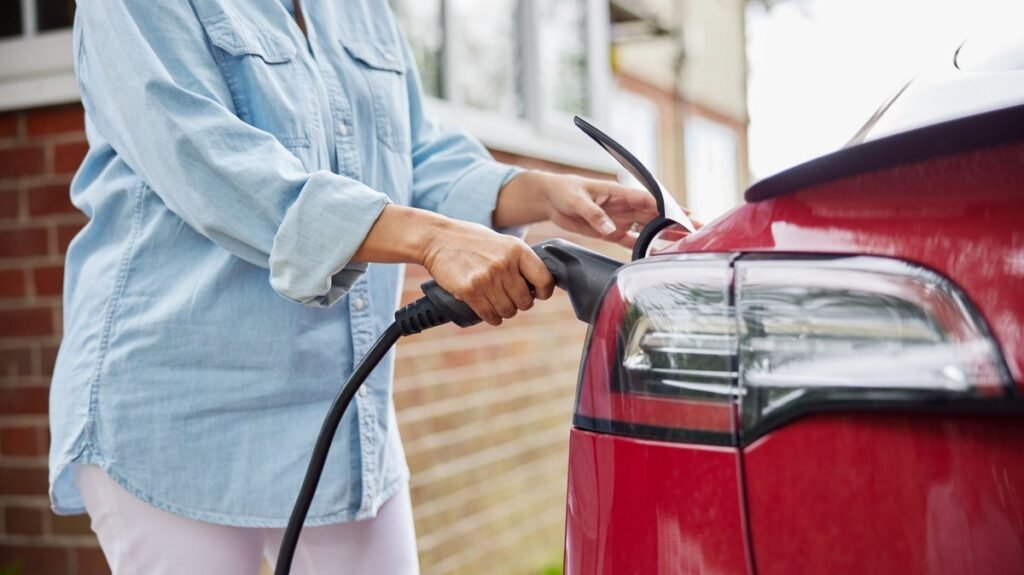
Electric vehicle owners have three main charging options available, each suited to different driving patterns and budgets. Understanding the differences between Level 1, Level 2, and Level 3 chargers—and their tradeoffs in speed, cost, and battery health—helps new EV drivers make the right choice for their situation.
The three charging levels differ fundamentally in power delivery and how they convert electricity for the battery. Level 1 chargers plug into standard 120-volt household outlets found throughout North America and deliver roughly 1.4 kilowatts of power. Level 2 chargers connect to 240-volt circuits and provide substantially more power, with a 40-amp charger delivering up to 9.6 kilowatts, and higher-amperage models reaching 19.2 kilowatts or more. Both Level 1 and Level 2 supply alternating current that the vehicle's onboard charger converts to direct current before reaching the battery. Level 3 chargers work differently: they perform the AC-to-DC conversion before the power reaches the car, bypassing the onboard charger entirely and delivering high-voltage direct current straight to the battery. This approach allows Level 3 chargers to push between 50 and 500 kilowatts of power, though charging speeds decline as the battery fills.
Charge times vary dramatically across the three levels. A Level 1 charger typically requires more than 40 hours to fully charge an EV battery from empty, though it adds roughly 5 miles of range per hour of charging. This means an overnight 8-hour charge session yields around 40 miles of range. Level 2 chargers are far faster, with a 40-amp unit adding over 30 miles of range per hour, making it possible to gain hundreds of miles overnight. Level 3 chargers are the speediest option, capable of adding over 100 miles in a single hour and fully recharging some vehicles in one to two hours. Newer models like the Lucid Gravity support charging at up to 400 kilowatts, while the Tesla Model Y maxes out between 175 and 250 kilowatts depending on the variant.
For home charging, the choice between Level 1 and Level 2 depends on driving habits and distance. Drivers who travel only a few miles daily may find Level 1 adequate, especially if they can charge overnight or take advantage of off-peak electricity rates offered by many utility companies. The investment in a Level 2 charger—which costs hundreds of dollars plus electrical upgrades—makes more sense for those who regularly drive longer distances during the week or need faster overnight charging. Cold weather complicates the decision: some EV batteries require preheating in winter, and Level 1 chargers may struggle to both warm the battery and deliver charging power simultaneously, making Level 2 the more practical choice in frigid climates. Drivers uncertain about the investment can also rely on public chargers for occasional longer trips while using Level 1 at home.
Level 3 chargers remain uncommon in residential settings because they require substantial electrical infrastructure upgrades that make home installation impractical for most owners. Instead, these fast chargers appear in commercial locations like parking lots, highway rest stops, and dedicated charging stations. They excel for road trips and quick top-ups when time is limited, offering the closest experience to refueling a gasoline vehicle. However, Level 3 charging carries two potential drawbacks: the chargers themselves are expensive to operate, and while research continues, some concern exists about whether frequent fast charging affects long-term battery longevity. Sticking to Level 2 charging at home can mitigate battery concerns for drivers prioritizing durability.
Public charger networks are undergoing a significant transition in North America. The industry is shifting from older J1772 and CCS connectors toward NACS, the plug standard historically used by Tesla and now adopted as the official North American standard for new electric vehicles. This transition creates a compatibility challenge: a car requiring NACS cannot connect to a charger offering only CCS without an adapter. Many charging stations now feature multiple connector types, but not all do. Drivers planning road trips should use apps like PlugShare or ChargePoint to identify which connectors and charging levels are available at specific locations before arriving. Over time, the connector standardization should resolve compatibility issues, but currently checking ahead remains essential.
The right charging solution ultimately depends on three factors: where you plan to charge, your typical daily driving distance, and local electricity rates. Short-distance commuters with access to overnight charging may need only Level 1. Those driving longer distances or wanting faster overnight charging should consider Level 2, despite the upfront cost. Level 3 chargers serve primarily as public infrastructure for longer trips and quick charging sessions away from home. By matching your charging method to your actual driving patterns and budget, EV owners can minimize costs while maintaining the range and convenience they need.